4 min read
What You Need To Know About the March 2025 Total Lunar Eclipse
The Moon will pass into Earth’s shadow and appear to turn red on the night of March 13 or early in the morning on March 14, depending on time zone. Here’s what you need to know about the total lunar eclipse.
What is a lunar eclipse?
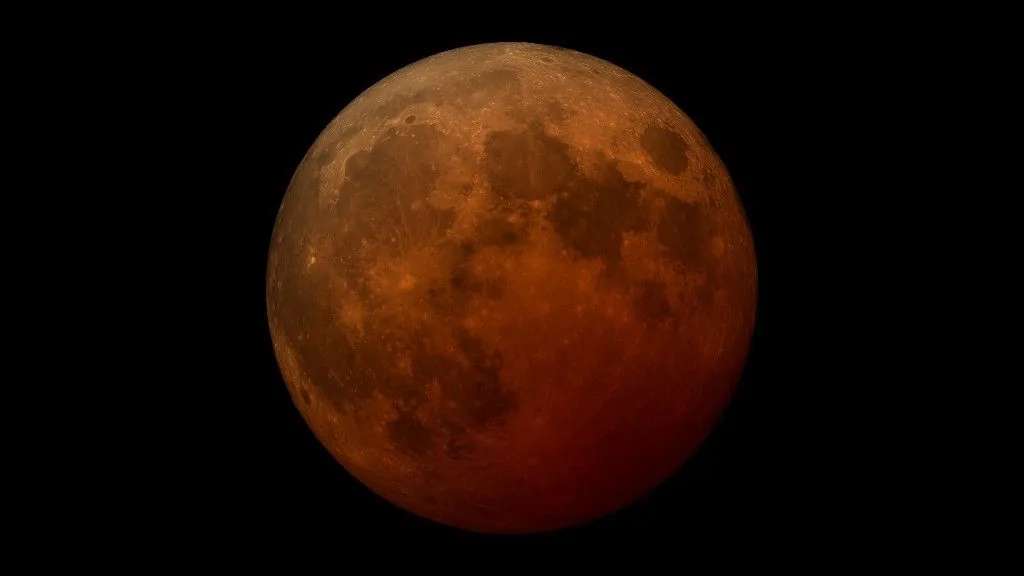
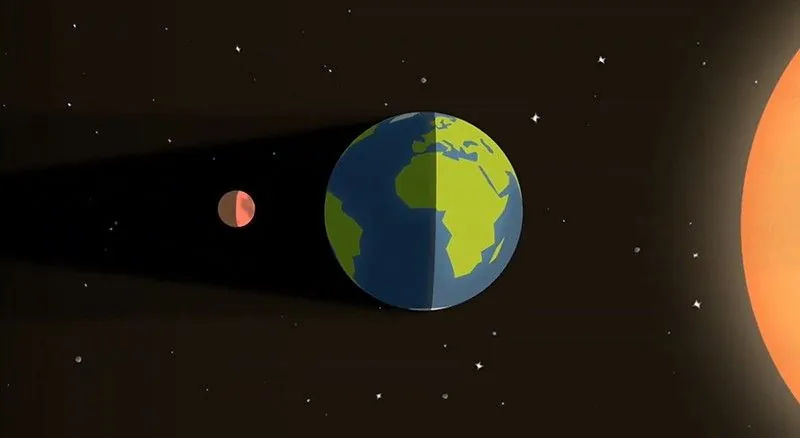
A lunar eclipse occurs when the Sun, Earth, and Moon align so that the Moon passes into Earth’s shadow. In a total lunar eclipse, the entire Moon falls within the darkest part of Earth’s shadow, called the umbra. When the Moon is within the umbra, it appears red-orange. Lunar eclipses are sometimes called “Blood Moons” because of this phenomenon.
How can I observe the eclipse?
You don’t need any special equipment to observe a lunar eclipse, although binoculars or a telescope will enhance the view. A dark environment away from bright lights makes for the best viewing conditions.
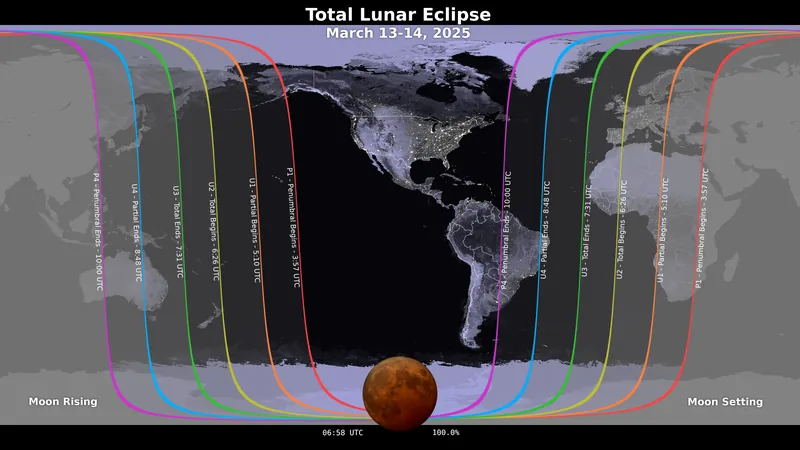
This eclipse will be visible from Earth’s Western Hemisphere.
What can I expect to observe?
Why does the Moon turn red during a lunar eclipse?
The same phenomenon that makes our sky blue and our sunsets red causes the Moon to turn reddish-orange during a lunar eclipse. Sunlight appears white, but it actually contains a rainbow of components—and different colors of light have different physical properties. Blue light scatters relatively easily as it passes through Earth’s atmosphere. Reddish light, on the other hand, travels more directly through the air.
When the Sun is high on a clear day, we see blue light scattered throughout the sky overhead. At sunrise and sunset, when the Sun is near the horizon, incoming sunlight travels a longer, low-angle path through Earth’s atmosphere to observers on the ground. The bluer part of the sunlight scatters away in the distance (where it’s still daytime), and only the yellow-to-red part of the spectrum reaches our eyes.
During a lunar eclipse, the Moon appears red or orange because any sunlight that’s not blocked by our planet is filtered through a thick slice of Earth’s atmosphere on its way to the lunar surface. It’s as if all the world’s sunrises and sunsets are projected onto the Moon.
What else can I observe on the night of the eclipse?
Look to the western sky on the night of the eclipse for a glimpse of planets Jupiter and Mars. The Moon will be in the constellation Leo, under the lion’s hind paw, at the beginning of the eclipse; soon afterward, it will cross into the constellation Virgo. As Earth’s shadow dims the Moon’s glow, constellations may be easier to spot than usual.
Visit our What’s Up guide for more March 2025 skywatching tips, and find lunar observing recommendations for each day of the year in our Daily Moon Guide.
Writers: Caela Barry, Ernie Wright, and Molly Wasser
Learn More and Get Involved
The Moon and Eclipses
There are two types of eclipses: lunar and solar. During a lunar eclipse, Earth’s shadow obscures the Moon. During a solar eclipse, the Moon blocks the Sun from view.
International Observe the Moon Night
You’re invited! Join observers around the world in an annual celebration of lunar observation, science, exploration, arts, and culture.
Share
Details
Last Updated
Mar 06, 2025
Related Terms
Explore More
2 min read
10 Things: Movie Night
Article
13 hours ago
3 min read
What’s Up: October 2026 Skywatching Tips from NASA
Article
20 hours ago
2 min read
October’s Night Sky Notes: Spooky Stargazing
Article
4 days ago
Keep Exploring
Discover More Topics From NASA
The Moon and Eclipses
There are two types of eclipses: lunar and solar. During a lunar eclipse, Earth’s shadow obscures the Moon. In a…
Solar Wind on the Moon
As you read this, the Sun is blasting charged particles (electrons, protons, and other ions) out into the solar system.…
Earth’s Moon
The Moon makes Earth more livable, sets the rhythm of ocean tides, and keeps a record of our solar system’s…
Skywatching
Source: NASA Science