2 min read
Hubble Captures Cotton Candy Clouds
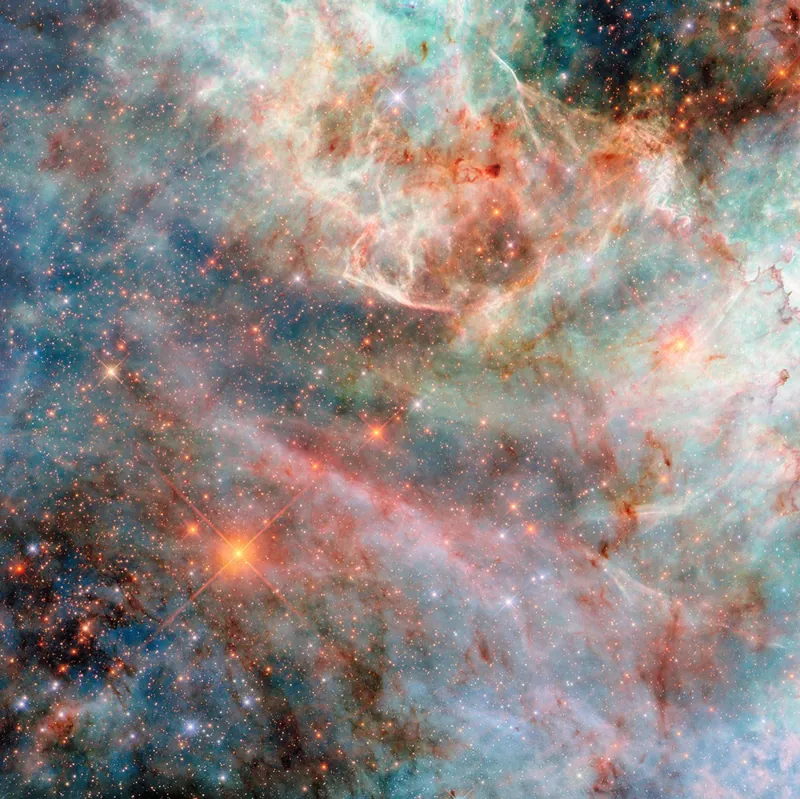
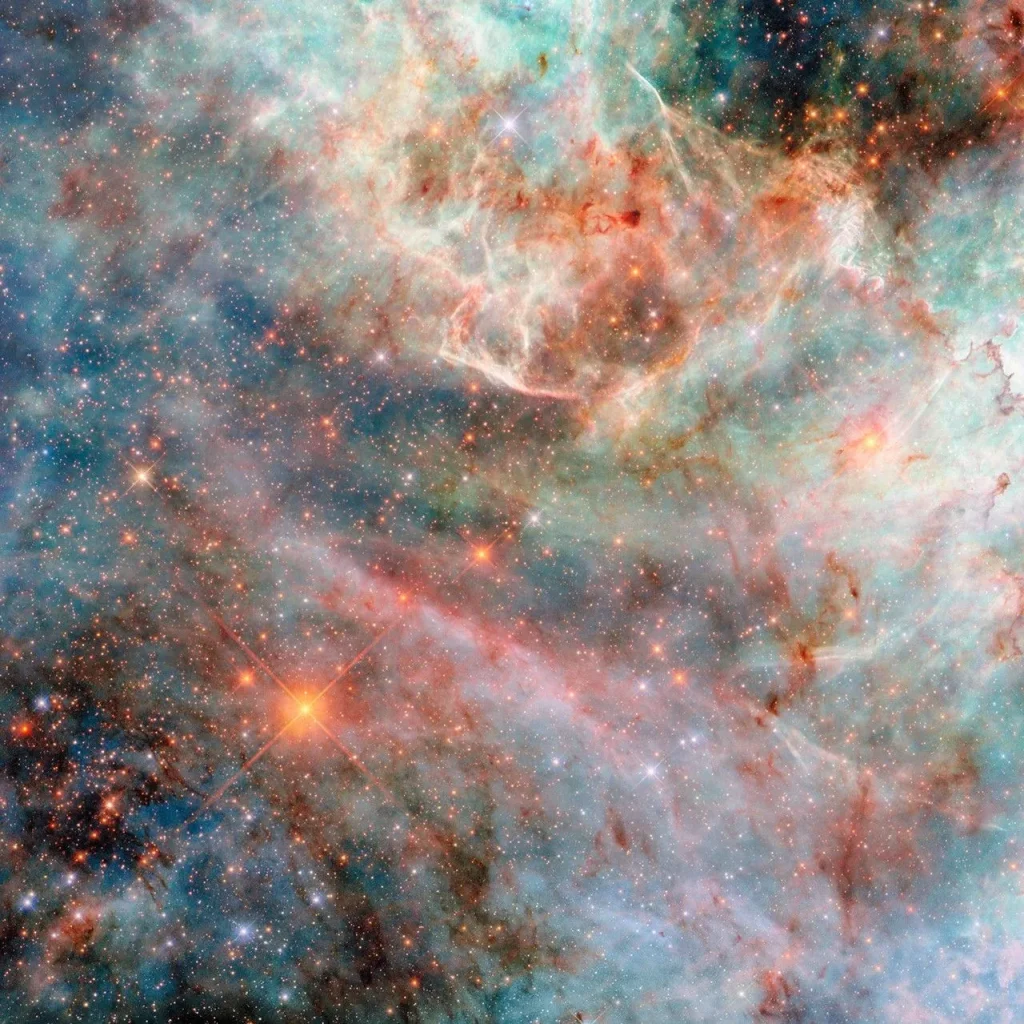
This NASA/ESA Hubble Space Telescope image features a sparkling cloudscape from one of the Milky Way’s galactic neighbors, a dwarf galaxy called the Large Magellanic Cloud. Located 160,000 light-years away in the constellations Dorado and Mensa, the Large Magellanic Cloud is the largest of the Milky Way’s many small satellite galaxies.
This view of dusty gas clouds in the Large Magellanic Cloud is possible thanks to Hubble’s cameras, such as the Wide Field Camera 3 (WFC3) that collected the observations for this image. WFC3 holds a variety of filters, and each lets through specific wavelengths, or colors, of light. This image combines observations made with five different filters, including some that capture ultraviolet and infrared light that the human eye cannot see.
The wispy gas clouds in this image resemble brightly colored cotton candy. When viewing such a vividly colored cosmic scene, it is natural to wonder whether the colors are ‘real’. After all, Hubble, with its 7.8-foot-wide (2.4 m) mirror and advanced scientific instruments, doesn’t bear resemblance to a typical camera! When image-processing specialists combine raw filtered data into a multi-colored image like this one, they assign a color to each filter. Visible-light observations typically correspond to the color that the filter allows through. Shorter wavelengths of light such as ultraviolet are usually assigned blue or purple, while longer wavelengths like infrared are typically red.
This color scheme closely represents reality while adding new information from the portions of the electromagnetic spectrum that humans cannot see. However, there are endless possible color combinations that can be employed to achieve an especially aesthetically pleasing or scientifically insightful image.
Text Credit: ESA/Hubble
Watch “How Hubble Images are Made” on YouTube
@NASAHubble
@NASAHubble
@NASAHubble
Media Contact:
Claire Andreoli (claire.andreoli@nasa.gov)NASA’s Goddard Space Flight Center, Greenbelt, MD
Share
Details
Last Updated
Jan 29, 2026
EditorAndrea GianopoulosLocationNASA Goddard Space Flight Center
Related Terms
- Hubble Space Telescope
- Astrophysics
- Astrophysics Division
- Emission Nebulae
- Goddard Space Flight Center
- Nebulae
- The Universe
Keep Exploring
Discover More Topics From Hubble
Hubble Space Telescope
Since its 1990 launch, the Hubble Space Telescope has changed our fundamental understanding of the universe.
Hubble’s Nebulae
These ethereal veils of gas and dust tell the story of star birth and death.
Science Behind the Discoveries
Hubble’s Night Sky Challenge
Source: NASA Science