2 min read
Hubble Observations Give “Missing” Globular Cluster Time to Shine
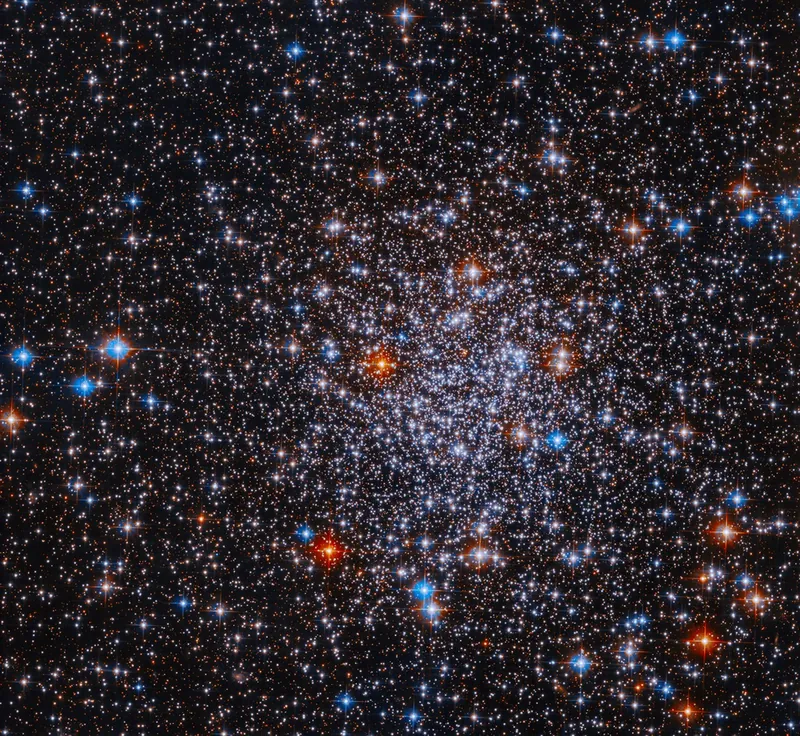
Download this image
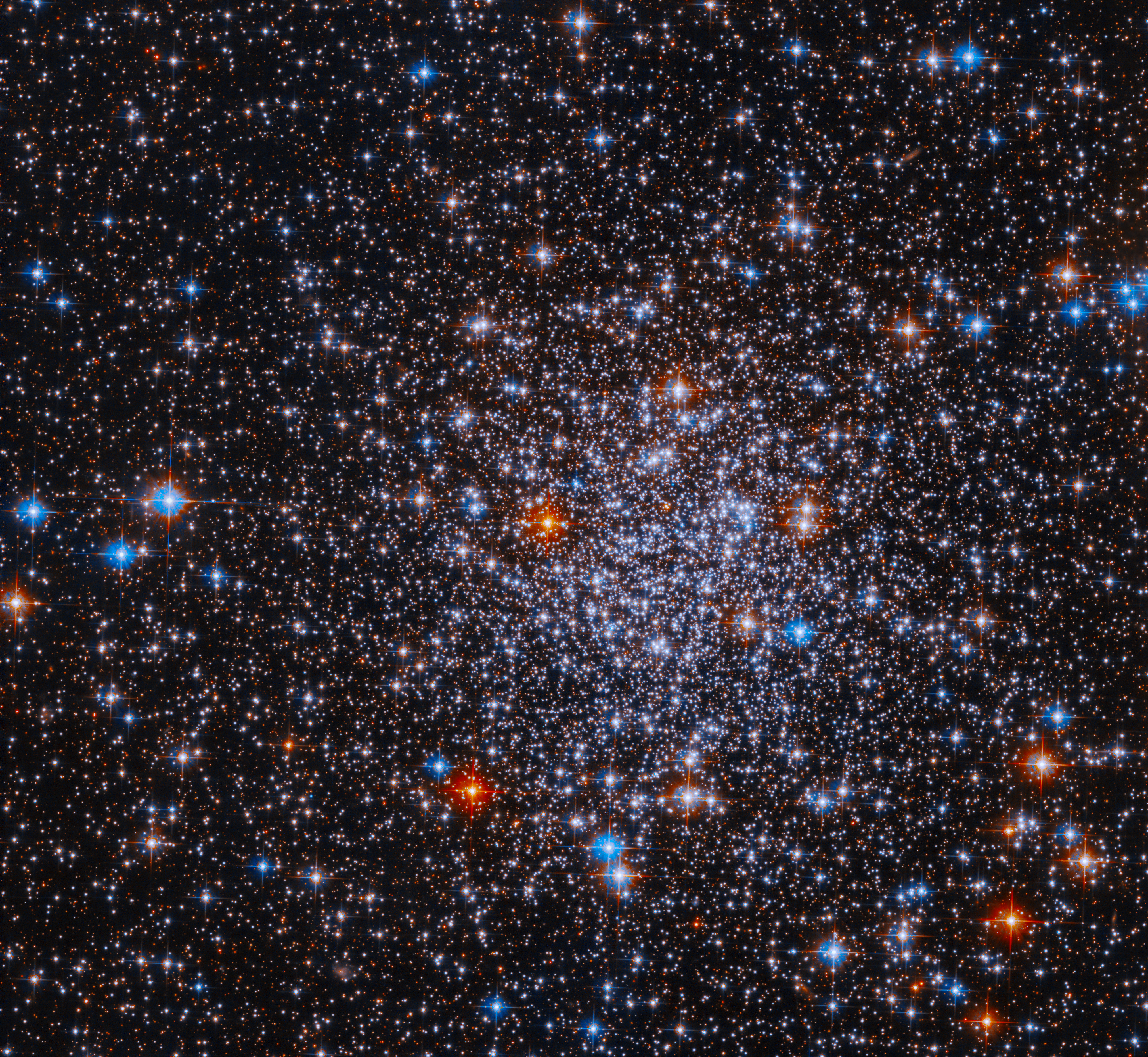
A previously unexplored globular cluster glitters with multicolored stars in this NASA Hubble Space Telescope image. Globular clusters like this one, called ESO 591-12 or Palomar 8, are spherical collections of tens of thousands to millions of stars tightly bound together by gravity. Globular clusters generally form early in the galaxies’ histories in regions rich in gas and dust. Since the stars form from the same cloud of gas as it collapses, they typically hover around the same age. Strewn across this image of ESO 591-12 are a number of red and blue stars. The colors indicate their temperatures; red stars are cooler, while the blue stars are hotter.
Hubble captured the data used to create this image of ESO 591-12 as part of a study intended to resolve individual stars of the entire globular cluster system of the Milky Way. Hubble revolutionized the study of globular clusters since earthbound telescopes are unable to distinguish individual stars in the compact clusters. The study is part of the Hubble Missing Globular Clusters Survey, which targets 34 confirmed Milky Way globular clusters that Hubble has yet to observe.
The program aims to provide complete observations of ages and distances for all of the Milky Way’s globular clusters and investigate fundamental properties of still-unexplored clusters in the galactic bulge or halo. The observations will provide key information on the early stages of our galaxy, when globular clusters formed.
Explore More
Hubble’s Star Clusters
Exploring the Birth of Stars
@NASAHubble
@NASAHubble
@NASAHubble
Media Contact:
Claire AndreoliNASA’s Goddard Space Flight Center, Greenbelt, MDclaire.andreoli@nasa.gov
Share
Details
Last Updated
Jul 03, 2025
EditorAndrea GianopoulosLocationNASA Goddard Space Flight Center
Related Terms
- Hubble Space Telescope
- Astrophysics
- Astrophysics Division
- Galaxies, Stars, & Black Holes
- Globular Clusters
- Goddard Space Flight Center
- Star Clusters
- Stars
Keep Exploring
Discover More Topics From Hubble
Hubble Space Telescope
Since its 1990 launch, the Hubble Space Telescope has changed our fundamental understanding of the universe.
Hubble’s Cosmic Adventure
Hubble’s Night Sky Challenge
Hubble’s 35th Anniversary
Source: NASA Science