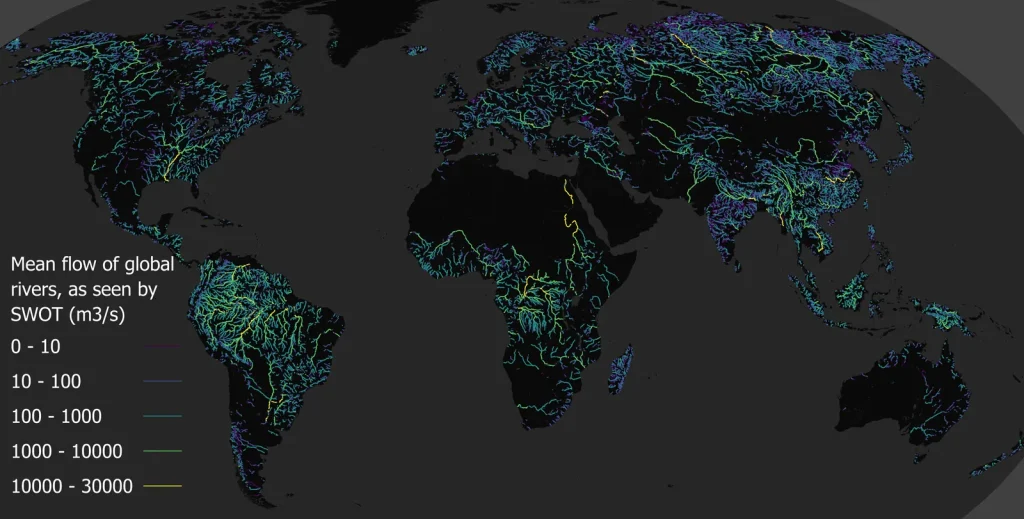
1 min read
SWOT Mission Unlocks a New View of Our Waterways
Explore how rivers move, change, and sustain life across the planet.
Using data from the SWOT (Surface Water and Ocean Topography) mission, jointly developed by the NASA/JPL and the Centre National d’Études Spatiales with contributions from the Canadian Space Agency and the United Kingdom Space Agency, scientists can now measure rivers continuously and across the entire globe for the first time in human history.
From the Mississippi River to the Amazon, these observations reveal how rivers flow, how they change over time, and how they support ecosystems, economies, and communities worldwide like never before.
Share
Details
Last Updated
Mar 23, 2026
EditorEarth Science Division Editorial Team
Related Terms
Explore More
3 min read
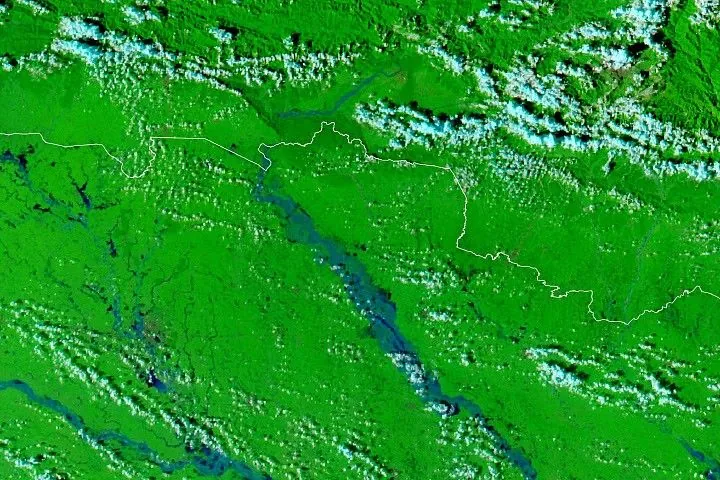
Rains Swamp the Gandak River
After days of torrential rain, the river rose to record-breaking levels in parts of Nepal…
Article
9 hours ago
3 min read
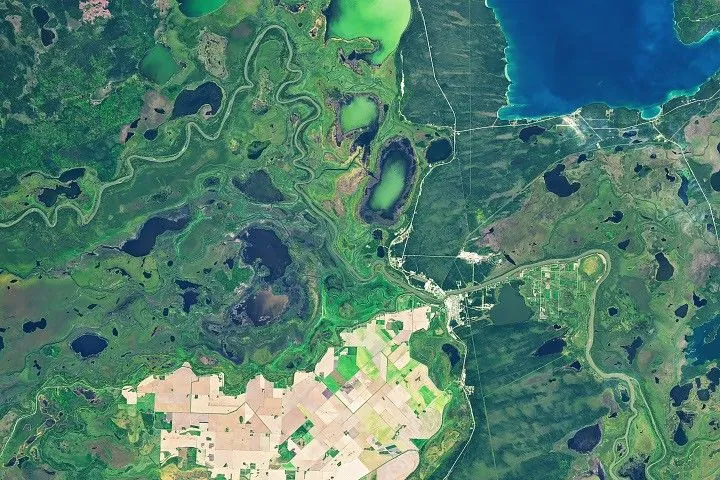
An Agricultural “Island” in the Saskatchewan River Delta
Surrounded by wetlands, Manitoba’s northernmost farmland near The Pas turns from green to brown over…
Article
1 day ago
4 min read
Powerful Storms Continue to Prowl the Pacific
Hurricanes Polo and Nolo sent destructive effects ashore amid an active season in the northeastern…
Article
2 days ago
Keep Exploring
Discover More Topics From NASA
Earth
Your home. Our Mission. And the one planet that NASA studies more than any other.
Earth Observatory
NASA’s Earth Observatory brings you the Earth, every day: images, stories, and discoveries about the environment, Earth systems, and climate.
Earth Science at Work
NASA Earth Science helps Americans respond to challenges and societal needs — such as wildland fires, hurricanes, and water supplies…
Earth Videos
Collection of Earth science videos explaining a variety of concepts and activities performed by NASA’s Earth Science Division.
Source: NASA Science