2 min read
Announcement About Research on Venus’s Chemistry
A paper about chemistry on Venus was published today in Nature Astronomy. NASA was not involved in the research and cannot comment directly on the findings; however, we trust in the scientific peer review process and look forward to the robust discussion that will follow its publication.
NASA has an extensive astrobiology program that searches for life in many different ways across the solar system and beyond. Over the past two decades, we’ve made new discoveries that collectively imply a significant increase of the likelihood to find life elsewhere.
Two of the next four candidate missions for NASA’s Discovery Program are focused on Venus, as is Europe’s EnVision mission, in which NASA is a partner. Venus also is a planetary destination we can reach with smaller missions.
As with an increasing number of planetary bodies, Venus is proving to be an exciting place of discovery, though it had not been a significant part of the search for life because of its extreme temperatures, atmospheric composition and other factors. Two of the next four candidate missions for NASA’s Discovery Program are focused on Venus, as is Europe’s EnVision mission, in which NASA is a partner. Venus also is a planetary destination we can reach with smaller missions.
Astrobiology is the study of the origin, evolution, and distraction of life in the universe. To learn more about Astrobiology at NASA, visit: https://astrobiology.nasa.gov
Venus: In Depth
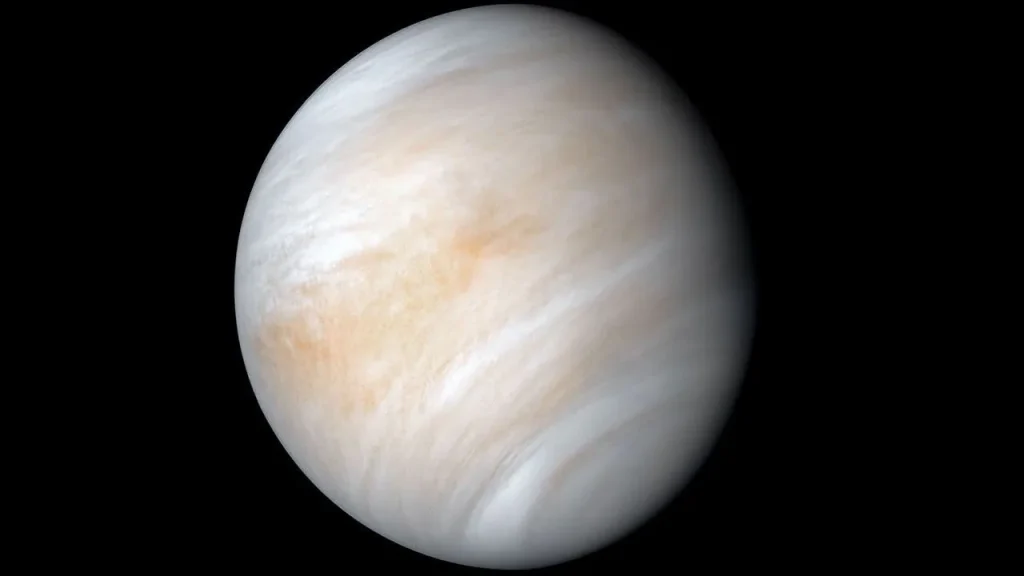
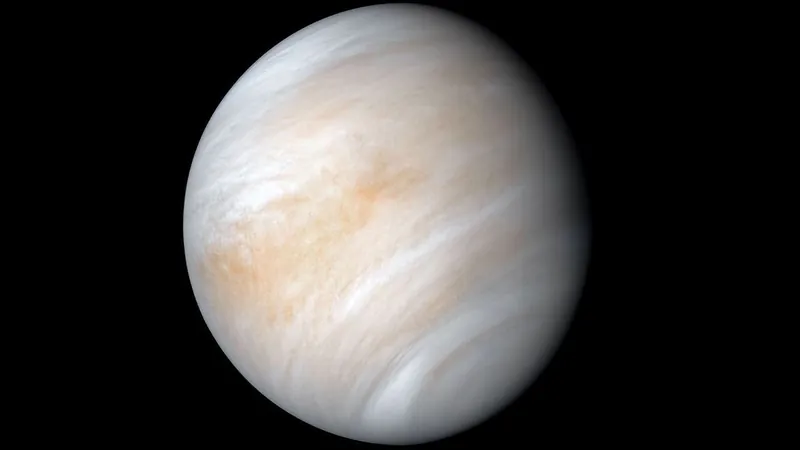
Second planet from the Sun and our closest planetary neighbor, Venus is similar in structure and size to Earth, but it is now a very different world. Venus spins slowly in the opposite direction most planets do. Its thick atmosphere traps heat in a runaway greenhouse effect, making it the hottest planet in our solar system—with surface temperatures hot enough to melt lead. Glimpses below the clouds reveal volcanoes and deformed mountains.
Share
Details
Last Updated
Nov 04, 2024
Related Terms
Explore More
2 min read
10 Things: Movie Night
Article
13 hours ago
3 min read
What’s Up: October 2026 Skywatching Tips from NASA
Article
21 hours ago
2 min read
October’s Night Sky Notes: Spooky Stargazing
Article
4 days ago
Keep Exploring
Discover More Topics From NASA
Sun
Facts About Earth
Asteroids, Comets & Meteors
Kuiper Belt
Source: NASA Science