By Laura E.P. Rocchio
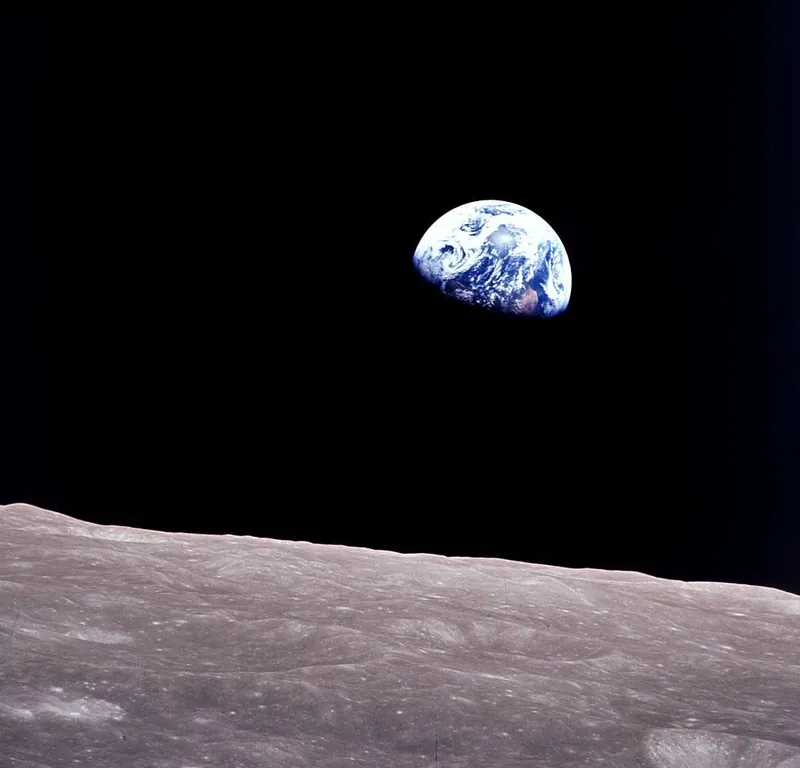
On Christmas Eve 1964, while doing reconnaissance aboard Apollo 8 for a future moon landing, Astronaut Bill Anders was awestruck as the blue marble of Earth rose above the Moon’s horizon—beholding that sight for the first time in human history.
He thought quickly, grabbed a Hasselblad camera loaded with color film, and snapped what has been called the most influential photo ever taken.
The photo, known as Earthrise, showed our fragile, serene planet against the void of space. That iconic image has been cited as impetus for the environmental movement. Anders later said, “We came all this way to explore the Moon, and the most important thing is that we discovered the Earth.”
Astronauts often report a sense of awe and transcendence when seeing Earth from above—a phenomenon known as the overview effect. Anders’ Earthrise photo shared that sense of awe with the entire world.
Earthrise and other photographs of Earth taken during the Apollo missions helped spark the idea for a dedicated Earth-observing satellite program—Landsat was the result.
On Friday, June 7, 2024, Anders, 90, died when the vintage plane he was flying crashed into the San Juan Channel near Jones Island, north of Seattle.
Seeing the Earth from above never got old for Anders.
He will be greatly missed.
For more information about Earthrise’s influence on the Landsat Program see the first chapter, “The Vision: Earth Rising,” of the open access book Landsat’s Enduring Legacy: Pioneering Earth Observation from Space.
Related Resources
- NASA Administrator Remembers Apollo Astronaut William Anders, NASA
- Earthrise: A Conversation with Apollo 8 Astronaut Bill Anders; NASA+
Explore More
3 min read
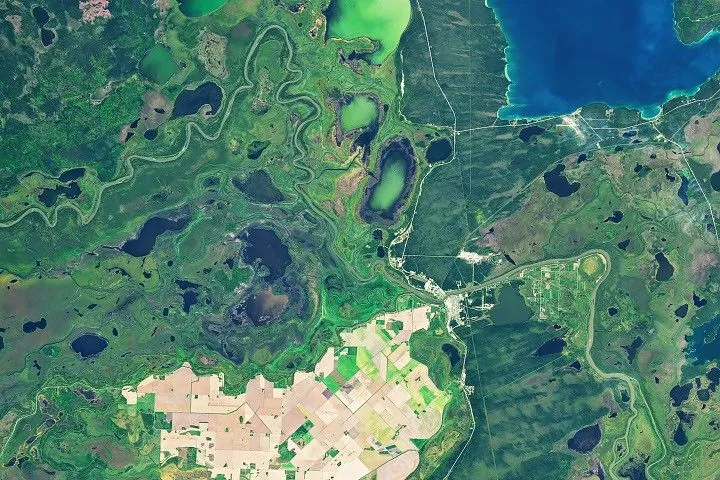
An Agricultural “Island” in the Saskatchewan River Delta
Surrounded by wetlands, Manitoba’s northernmost farmland near The Pas turns from green to brown over…
Article
1 day ago
3 min read
Boom Year for Desert Blooms
Carpets of wildflowers burst from arid, ochre-colored land in Western Australia following winter rains.
Article
1 week ago
4 min read
Lake Powell Drops to Record-Low Levels
Snow drought and unusually warm temperatures in the Colorado Basin in 2026 helped drive down…
Article
2 weeks ago
Source: NASA Science