Author: Jeanette Kazmierczak
-
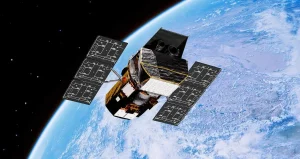
NASA Highlights Lessons Learned From Swift Boost Mission
A commercial mission to boost NASA’s Swift observatory concluded without raising the spacecraft’s orbit, but the agency and industry vendor gained valuable experience that will benefit future in-space servicing programs.
-
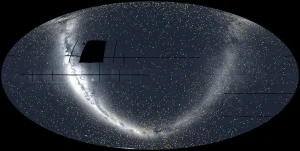
NASA’s Planet-Hunting TESS Reveals Dazzling Night Sky
NASA’s TESS has released its most complete view of the starry sky to date
-
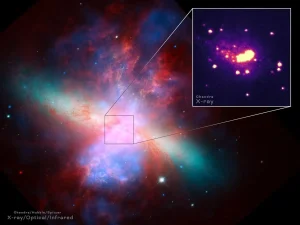
NASA-JAXA’s XRISM Telescope Clocks Hot Wind of Galaxy M82
For the first time, astronomers have directly measured the speed of superheated gas billowing from a cauldron of stellar activity at the heart of M82.
-
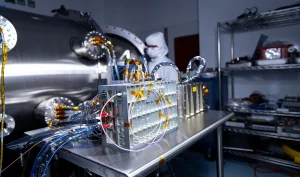
NASA, Partners Advance LISA Prototype Hardware
Engineers and scientists at NASA’s Goddard Space Flight Center in Greenbelt, Maryland, completed tests this month on a second early version of a key element of the upcoming LISA (Laser Interferometer Space Antenna) mission. The LISA mission, a collaboration between…
-
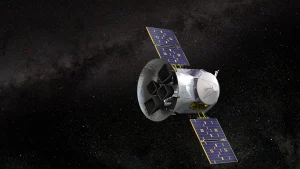
TESS Status Updates
Jan. 23, 2026 NASA’s TESS Returns to Science Observations NASA’s TESS (Transiting Exoplanet Survey Satellite) entered safe mode Jan. 15 and returned to normal science operations Jan. 18. The operations team determined the issue arose when TESS slewed to point…
-
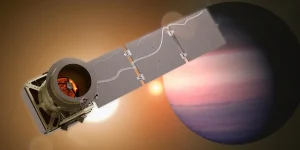
NASA’s Pandora Satellite, CubeSats to Explore Exoplanets, Beyond
A new NASA spacecraft called Pandora is launching to study the atmospheres of exoplanets and their stars.
-
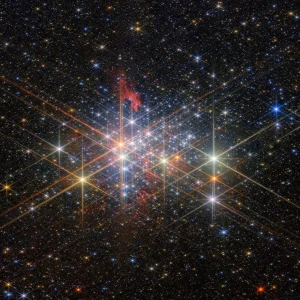
NASA’s Fermi Spots Young Star Cluster Blowing Gamma-Ray Bubbles
For the first time, astronomers using NASA’s Fermi Gamma-ray Space Telescope have traced a budding outflow of gas from a cluster of young stars in our galaxy — insights that help us understand how the universe has evolved as NASA…
-
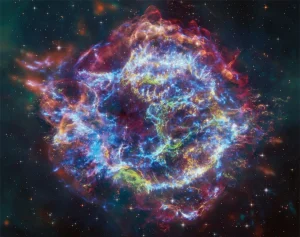
NASA-JAXA XRISM Finds Elemental Bounty in Supernova Remnant
For the first time, scientists have made a clear X-ray detection of chlorine and potassium in the wreckage of a star using data from the Japan-led XRISM (X-ray Imaging and Spectroscopy Mission) spacecraft. The Resolve instrument aboard XRISM, pronounced “crism,”…
-
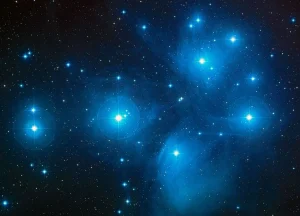
NASA’s TESS Spacecraft Triples Size of Pleiades Star Cluster
Astronomers have revolutionized our understanding of a collection of stars in the northern sky called the Pleiades. They used data from NASA’s TESS (Transiting Exoplanet Survey Satellite) and other observatories as NASA explores the secrets of the universe for the…
-
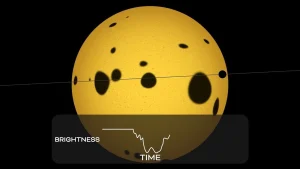
Astronomers Map Stellar ‘Polka Dots’ Using NASA’s TESS, Kepler
Scientists have devised a new method for mapping the spottiness of distant stars by using observations from NASA missions of orbiting planets crossing their stars’ faces. The model builds on a technique researchers have used for decades to study star…