Category: History
-
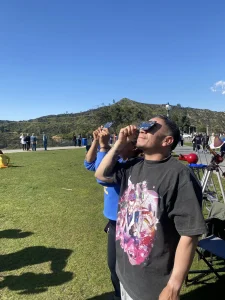
Calling all Eclipse Enthusiasts: Become a NASA Partner Eclipse Ambassador!
By Vivian White, Astronomical Society of the Pacific Are you an astronomy enthusiast or undergraduate student with a passion for sharing space science? We are excited to share with you a wonderful opportunity to become an official NASA Partner Eclipse…
-
NASA’s Scientists and Volunteers Tackle the October 14 Solar Eclipse
Did you see October 14th’s solar eclipse? Most of the time we can easily forget that we are on a planet spinning and orbiting in space with other celestial bodies. Watching the Moon move across the face of the Sun…
-
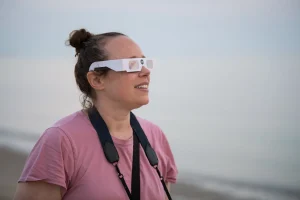
Five Tips for Photographing the Annular Solar Eclipse on Oct. 14
An annular solar eclipse is crossing the Americas on Oct. 14, 2023. This astronomical event is a perfect opportunity to capture unforgettable images of the Moon “taking a bite” out of the Sun or creating a “ring of fire” effect…
-
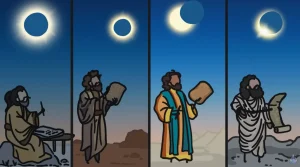
NASA HEAT Releases Two Eclipse-Focused MinuteEarth Videos
In September, 2023, the NASA Heliophysics Education Activation Team (HEAT), in partnership with Neptune Studios, released two eclipse-related videos as part of the MinuteEarth video series – short illustrated stories about science and our awesome planet. Without eclipses, our world…
-
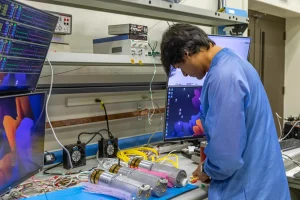
To Study Atmosphere, NASA Rockets Will Fly into Oct. Eclipse’s Shadow
UPDATE: The three rockets comprising the APEP mission launched on Saturday, Oct. 14th at 10:00am, 10:35am, and 11:10am MT from White Sands Missile Range, and reached altitudes of 216 miles, 219 miles, and 218 miles (348 kilometers, 353 kilometers, and…
-
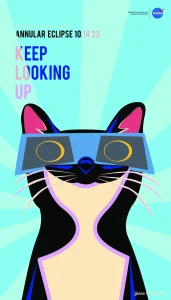
Meet the Creators, Part 2
By Miles HatfieldNASA’s Goddard Space Flight Center Two solar eclipses will cross the United States within the next year: an annular eclipse on Oct. 14, 2023, and a total solar eclipse on April 8, 2024. Ahead of the eclipses, NASA…
-
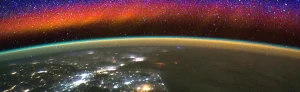
The Impact of Solar Eclipses on the Structure and Dynamics of Earth’s Upper Atmosphere
By McKenzie DentonHamSCI Citizen Science Team Member Solar eclipses can have a noticeable impact on the structure and dynamics of Earth’s upper atmosphere – the ionosphere. This is primarily due to the sudden reduction in solar radiation reaching the Earth’s…
-
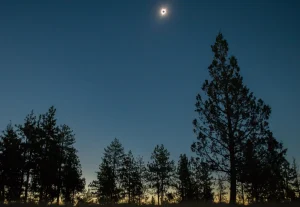
Observe How Eclipses Impact Wildlife with the Eclipse Soundscapes Project
By Kelsey PerrettEclipse Soundscapes Want to experience a solar eclipse with ALL of your senses? The Eclipse Soundscapes Project, a NASA citizen science project funded by NASA’s Science Activation program, allows you to do just that while advancing our knowledge…
-

Ten Years of TIRS: Data for a Thirsty World
Landsat 8 very nearly flew without a thermal infrared sensor. This is the backstory of how TIRS made it onto Landsat 8.
-
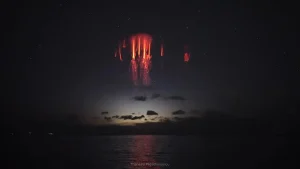
Spritacular: NASA’s New Citizen Science Project to Capture Elusive Upper Atmospheric Electrical Phenomena on Camera
A flash of lightning, and then – something else. High above the storm, a crimson figure blinks in and out of existence. If you saw it, you are a lucky witness of a sprite, one of the least-understood electrical phenomena…