Category: Missions
-
Smarter Searching: NASA AI Makes Science Data Easier to Find
Imagine shopping for a new pair of running shoes online. If each seller described them differently—one calling them “sneakers,” another “trainers,” and someone else “footwear for exercise”—you’d quickly feel lost in a sea of mismatched terminology. Fortunately, most online stores…
-
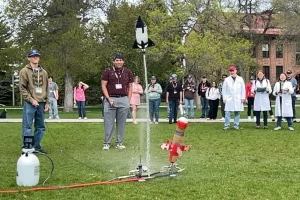
Mission Accomplished! Artemis ROADS III National Challenge Competitors Celebrate their Achievements
The NASA Science Activation program’s Northwest Earth and Space Sciences Pathways (NESSP) team has successfully concluded the 2024–2025 Artemis ROADS III National Challenge, an educational competition that brought real NASA mission objectives to student teams (and reached more than 1,500…
-
Can Solar Wind Make Water on Moon? NASA Experiment Shows Maybe
Scientists have hypothesized since the 1960s that the Sun is a source of ingredients that form water on the Moon. When a stream of charged particles known as the solar wind smashes into the lunar surface, the idea goes, it…
-
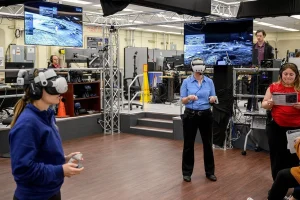
How NASA is Using Virtual Reality to Prepare for Science on Moon
When astronauts walk on the Moon, they’ll serve as the eyes, hands, and boots-on-the-ground interpreters supporting the broader teams of scientists on Earth. NASA is leveraging virtual reality to provide high-fidelity, cost-effective support to prepare crew members, flight control teams,…
-
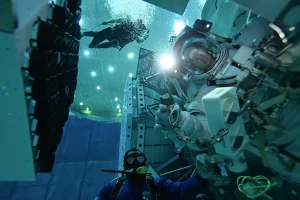
Astronaut Set to Patch NASA’s X-ray Telescope Aboard Space Station
NASA astronaut Nick Hague will install patches to the agency’s NICER (Neutron star Interior Composition Explorer) X-ray telescope on the International Space Station as part of a spacewalk scheduled for Jan. 16. Hague, along with astronaut Suni Williams, will also…
-
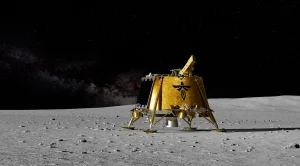
NASA’s LEXI Will Provide X-Ray Vision of Earth’s Magnetosphere
Editor’s Note, Feb. 25, 2025: The LEXI telescope was turned on successfully shortly after launch on Jan. 16. The instrument has operated for several hours every day conducting checkouts and initial commissioning, operating for a total of more than 50…
-
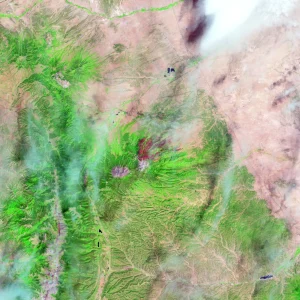
Expanded AI Model with Global Data Enhances Earth Science Applications
NASA, IBM, and Forschungszentrum Jülich have released an expanded version of the open-source Prithvi Geospatial artificial intelligence (AI) foundation model to support a broader range of geographical applications. Now, with the inclusion of global data, the foundation model can support…
-
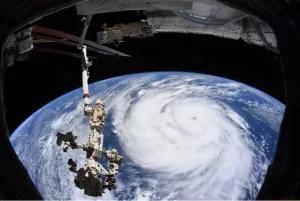
NASA AI, Open Science Advance Disaster Research and Recovery
By Lauren Perkins When you think of NASA, disasters such as hurricanes may not be the first thing to come to mind, but several NASA programs are building tools and advancing science to help communities make more informed decisions for…
-
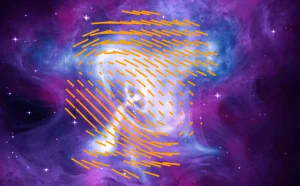
Revealing the Hidden Universe with Full-shell X-ray Optics at NASA MSFC
The study of X-ray emission from astronomical objects reveals secrets about the Universe at the largest and smallest spatial scales. Celestial X-rays are produced by black holes consuming nearby stars, emitted by the million-degree gas that traces the structure between…
-
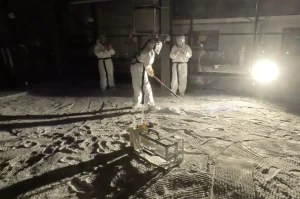
NASA’s Artemis Science Instrument Gets Tested in Moon-Like Sandbox
Scientists and engineers tested NASA’s LEMS (Lunar Environment Monitoring Station) instrument suite in a “sandbox” of simulated Moon “soil.”