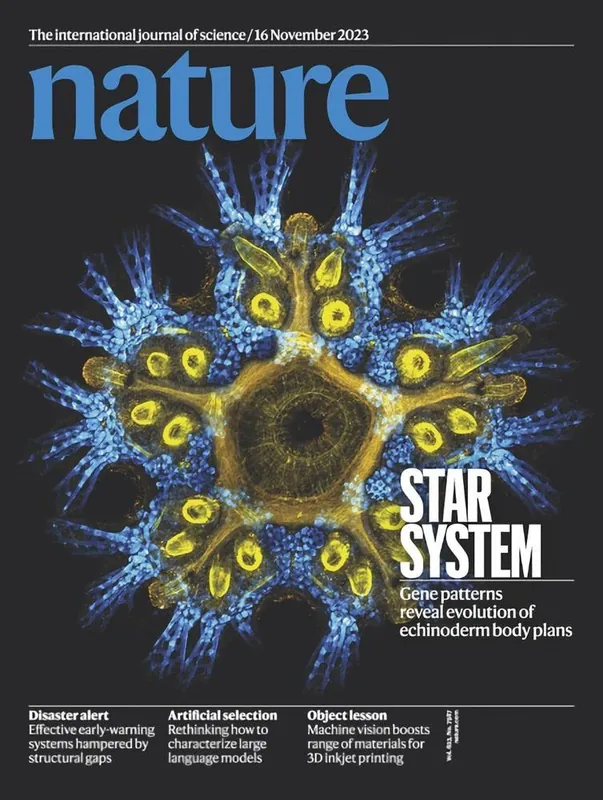
The following abstract was published in Nature 623, 502–508 (2023). The full paper can be read here:
Elliott, E.R., Aveline, D.C., Bigelow, N.P. et al. Quantum gas mixtures and dual-species atom interferometry in space. Nature 623, 502–508 (2023). https://doi.org/10.1038/s41586-023-06645-w
The capability to reach ultracold atomic temperatures in compact instruments has recently been extended into space. Ultracold temperatures amplify quantum effects, whereas free fall allows further cooling and longer interactions time with gravity—the final force without a quantum description. On Earth, these devices have produced macroscopic quantum phenomena such as Bose–Einstein condensates (BECs), superfluidity, and strongly interacting quantum gases. Terrestrial quantum sensors interfering the superposition of two ultracold atomic isotopes have tested the universality of free fall (UFF), a core tenet of Einstein’s classical gravitational theory, at the 10−12 level. In space, cooling the elements needed to explore the rich physics of strong interactions or perform quantum tests of the UFF has remained elusive. Here, using upgraded hardware of the multiuser Cold Atom Lab (CAL) instrument aboard the International Space Station (ISS), we report, to our knowledge, the first simultaneous production of a dual-species BEC in space (formed from 87Rb and 41K), observation of interspecies interactions, as well as the production of 39K ultracold gases. Operating a single laser at a ‘magic wavelength’ at which Rabi rates of simultaneously applied Bragg pulses are equal, we have further achieved the first spaceborne demonstration of simultaneous atom interferometry with two atomic species (87Rb and 41K). These results are an important step towards quantum tests of UFF in space and will allow scientists to investigate aspects of few-body physics, quantum chemistry and fundamental physics in new regimes without the perturbing asymmetry of gravity.
Supporting Articles
- New tools will help study quantum chemistry aboard the International Space Station
- Quantum chemistry experiment on ISS creates exotic 5th state of matter
- NASA’s Cold Atom Lab Sets Stage for Quantum Chemistry in Space
- In a first, dual-atom quantum gases produced in space thanks to NASA
- Ultracold atoms in space will let us stress test Einstein’s relativity
Explore More
6 min read
What You Need to Know About NASA’s SpaceX Crew-13 Mission
Four crew members are set to launch to the International Space Station as part of…
Article
4 days ago
5 min read
US-India Satellite Captures Time-lapse Video of Volcanic Eruption
Like tendrils on a vine, lava spreads out from the northern crater of Krasheninnikov, a…
Article
1 week ago
3 min read
Risks of Decompression Sickness and Venous Thromboembolism during Spaceflight and Patent Foramen Ovale Implications
NASA’s Office of the Chief Health and Medical Officer formed a working group in August…
Article
1 week ago
Keep Exploring
Discover More Topics From NASA
Missions
Humans in Space
Climate Change
Solar System
Source: NASA Science