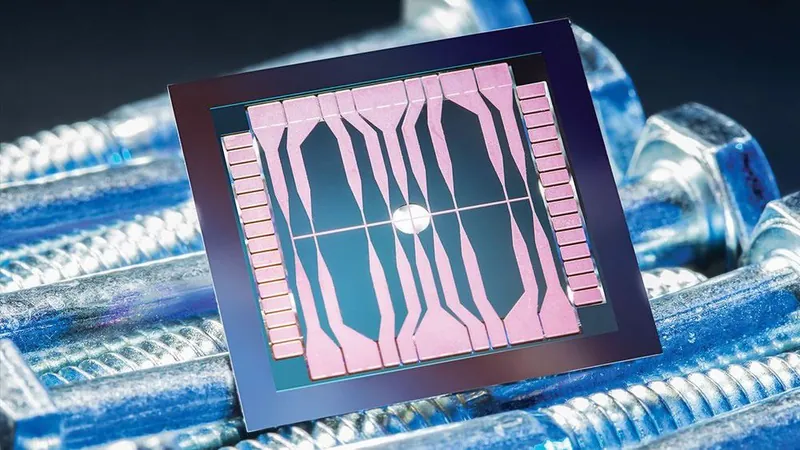
Atomic physicists tend to tinker away on their own, preferably in dark, hushed labs. When Eric Cornell started as a postdoc with Carl Wieman at JILA, an institute run jointly by the National Institute of Standards and Technology and the University of Colorado in Boulder, in 1990 he did his best to transform their second-floor lab into a basement. “We had these beautiful windows that looked out over the mountains,” Cornell says, “and we bought 3-inch-thick Styrofoam and cut it into squares and taped it over them.” The quiet and darkness made it easier to fiddle with the homemade lasers they were using to coax atoms into a new state of matter.
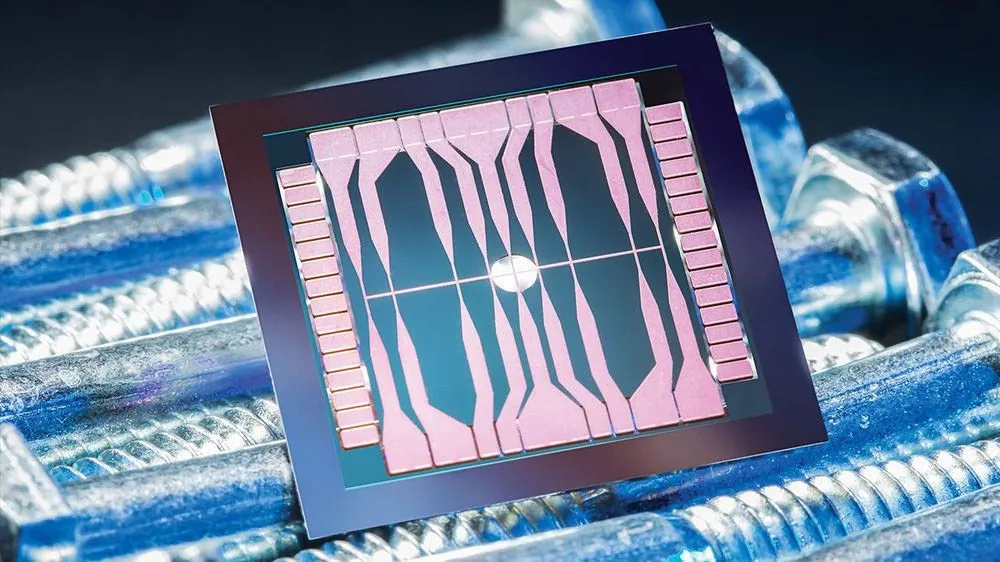
Cornell and Wieman were trying to cool a puff of rubidium gas to within a few billionths of a degree of absolute zero—colder than any place in nature, even the 2.73 kelvins of space. They hoped to produce a long-predicted state of matter called a Bose-Einstein condensate (BEC), in which the atoms shed their individual identities and crowd en masse into a single quantum wave. In 1995, they succeeded—a triumph that earned them a share of the 2001 Nobel Prize in Physics. “We finally unplugged that experiment just 2 years ago,” Cornell says.
Read more at sciencemag.com
Explore More
6 min read
What You Need to Know About NASA’s SpaceX Crew-13 Mission
Four crew members are set to launch to the International Space Station as part of…
Article
4 days ago
5 min read
US-India Satellite Captures Time-lapse Video of Volcanic Eruption
Like tendrils on a vine, lava spreads out from the northern crater of Krasheninnikov, a…
Article
1 week ago
3 min read
Risks of Decompression Sickness and Venous Thromboembolism during Spaceflight and Patent Foramen Ovale Implications
NASA’s Office of the Chief Health and Medical Officer formed a working group in August…
Article
1 week ago
Keep Exploring
Discover More Topics From NASA
Missions
Humans in Space
Climate Change
Solar System
Source: NASA Science