2 min read
Everything You Need to Know About the Halloween (Boo!) Moon
To view this video please enable JavaScript, and consider upgrading to a web browser that
supports HTML5 video
Animation showing the phase and libration of the Moon during October, 2020, highlighting the two full Moons in that month, with labels. Credit: NASA’s Scientific Visualization Studio/Ernie Wright
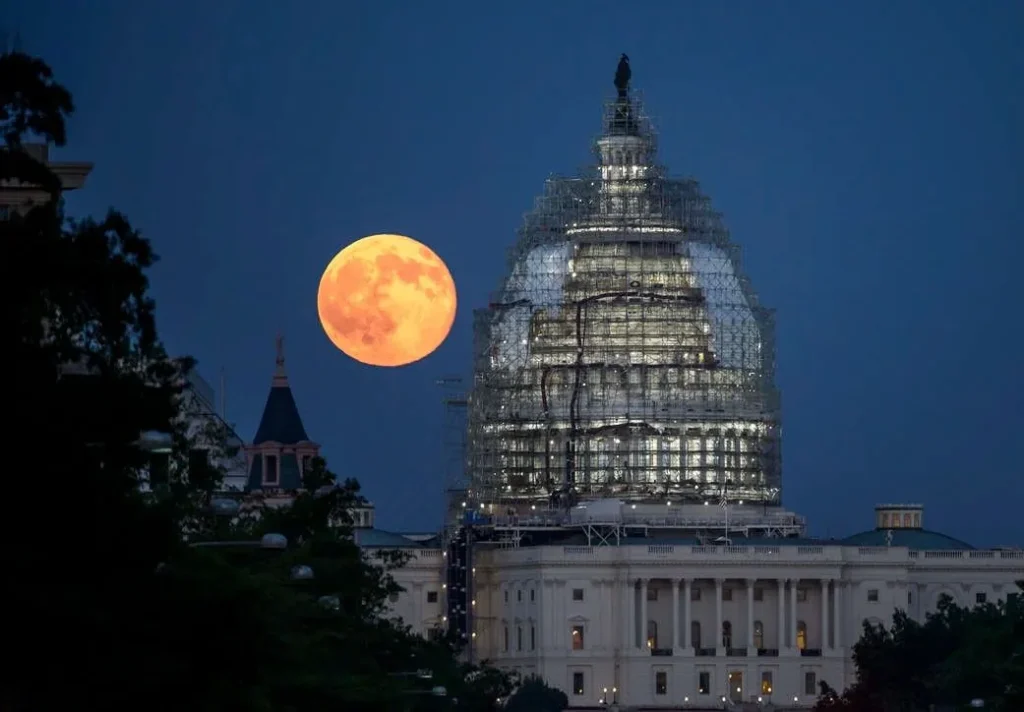
This week’s full Moon will deliver more than just Halloween ambience. On October 31, the Moon’s near side will be fully sunlit for the second time this month, an eerily-timed phenomenon known as a Blue Moon.
What is a Blue Moon?
That depends on whom—and when—you ask! Today, the phrase “Blue Moon” is commonly used to describe the second full Moon in a calendar month. The Halloween full Moon is a Blue Moon by this modern definition.
Past observers have used the same name differently. In a season with four full Moons instead of three, the third full Moon used to be (and sometimes still is) called “blue”. The Halloween full Moon is the second of three in autumn this year.
Will the Moon be a different color than usual?
No. The term “Blue Moon” refers to the full Moon’s timing, not its color.
How can I see the Halloween Blue Moon?
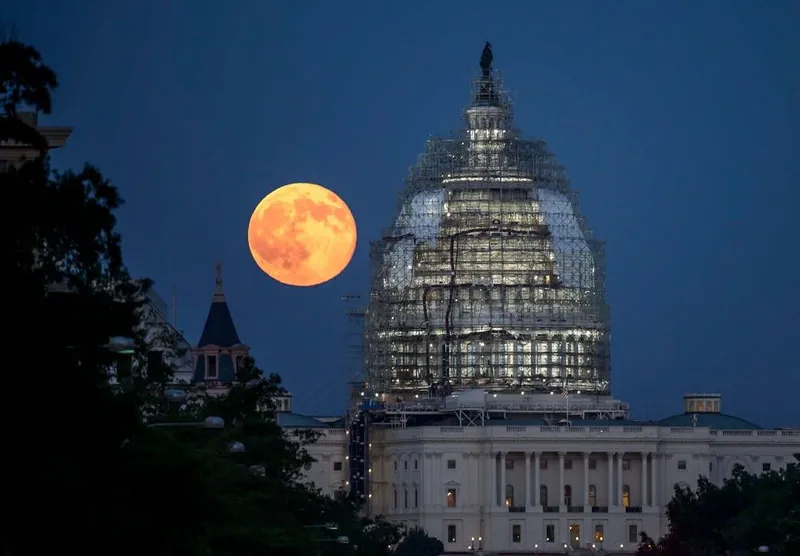
The Moon will appear full from everywhere on Earth on October 31st. Like all full Moons, the Blue Moon rises in the east around sunset and sets in the west around sunrise. It is highest overhead in the late night and very early morning hours. Explore our viewing guide, try your hand at lunar photography, or simply look outside and take in the view.
Are Blue Moons rare?
You’ve probably heard the phrase “once in a Blue Moon” used to describe something that happens infrequently. Astronomical Blue Moons have a regular pattern and occur roughly once every two and a half years. After October 2020, the next Blue Moons will take place in August 2023, May 2026, and December 2028.
How about Halloween Blue Moons?
Halloween falls on a full Moon once every nineteen years, on average. Since the Moon is full about once every 29.5 days, and October is 31 days long, all Halloween full moons are Blue Moons.
Carve out a moment to enjoy the Halloween Blue Moon! Lunar views are always a treat.
Caela BarryNASA’s Goddard Space Flight Center, Greenbelt, Md.
Last updated: Oct. 27, 2020
Share
Details
Last Updated
Nov 25, 2024
EditorNASA Moon Team
Related Terms
Explore More
3 min read
What’s Up: October 2026 Skywatching Tips from NASA
Article
21 hours ago
6 min read
NASA’s Moon Orbiter Spots New, ‘Once-in-Century’ Moon Crater
Article
2 weeks ago
3 min read
Celebrate International Observe the Moon Night with NASA
In April, the world watched as four humans circled the Moon for the first time…
Article
2 weeks ago
Keep Exploring
Discover More Topics From NASA
Earth
Your home. Our Mission. And the one planet that NASA studies more than any other.
Eclipses
Lunar Discovery and Exploration
Skywatching
Source: NASA Science