2 min read
Hubble Spies a Spiral So Inclined
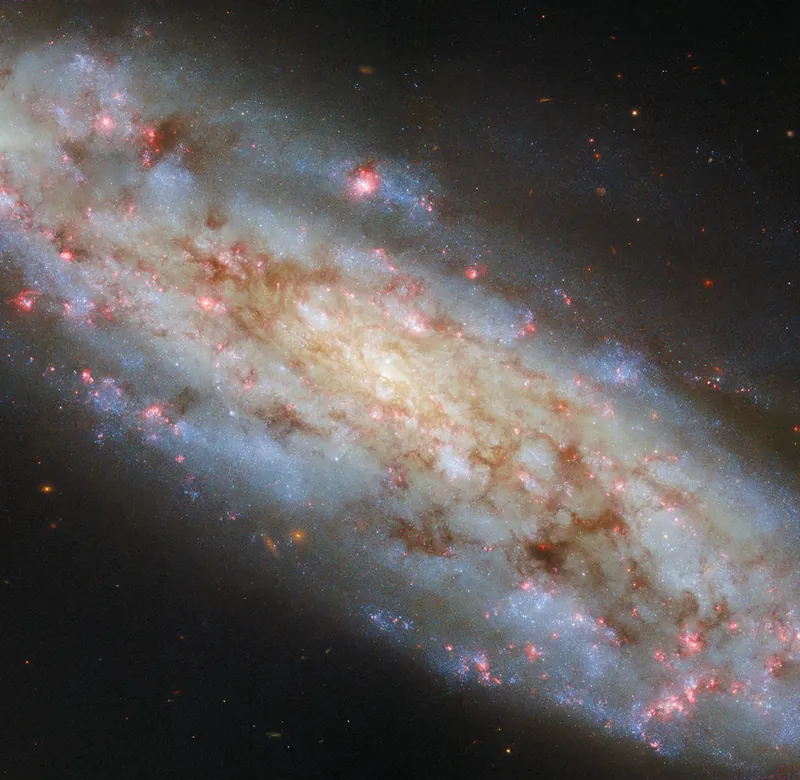
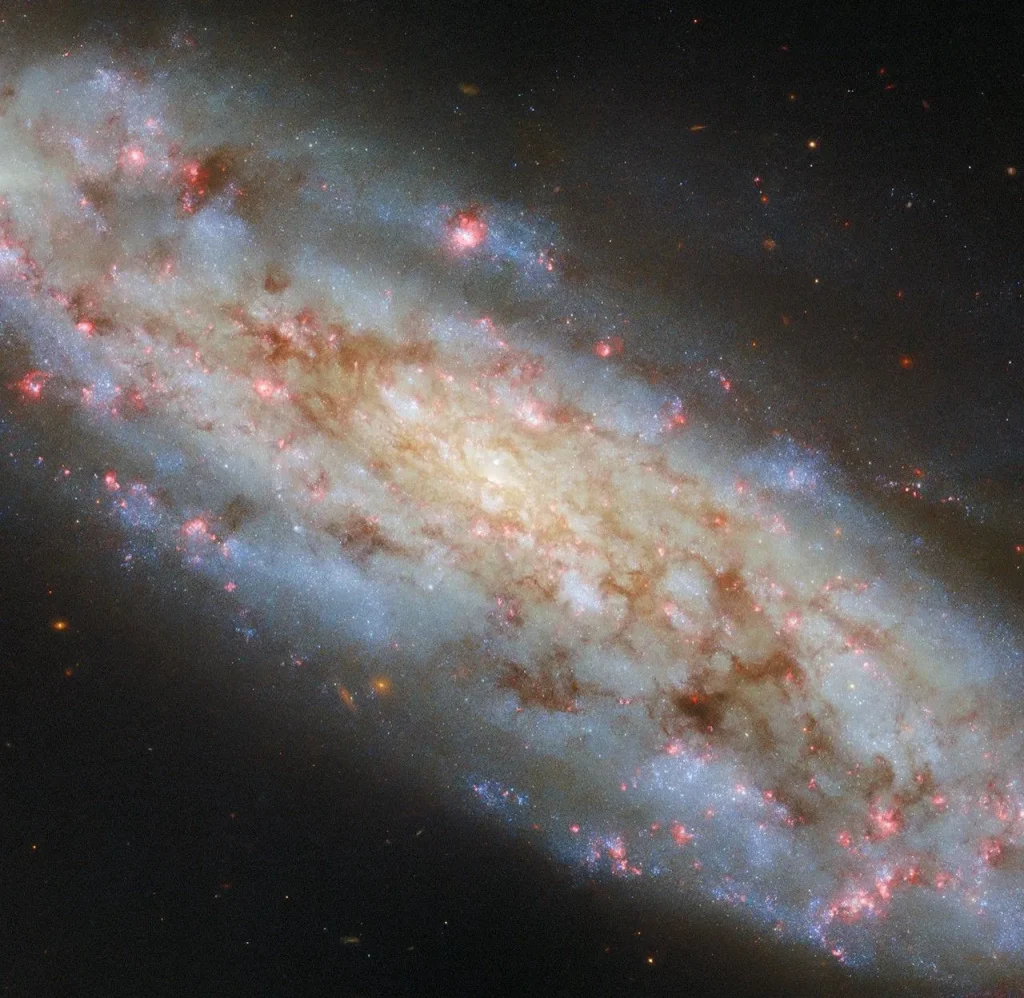
The stately and inclined spiral galaxy NGC 3511 is the subject of this NASA/ESA Hubble Space Telescope image. The galaxy is located 43 million light-years away in the constellation Crater (The Cup). From Hubble’s vantage point in orbit around Earth, NGC 3511 is tilted by about 70 degrees, intermediate between face-on galaxies that display the full disk of the spiral and its arms, and edge-on galaxies that offer a side view, revealing only their dense, flattened disks.
Astronomers are studying NGC 3511 as part of a survey of the star formation cycle in nearby galaxies. For this observing program, Hubble will record the appearance of 55 local galaxies using five filters that allow in different wavelengths, or colors, of light.
One of these filters allows only a specific wavelength of red light to pass through. Giant clouds of hydrogen gas glow in this red color when energized by ultraviolet light from hot young stars. As this image shows, NGC 3511 contains many of these bright red gas clouds, some of which are curled around clusters of brilliant blue stars. Hubble will help astronomers catalog and measure the ages of these stars, which are typically less than a few million years old and several times more massive than the Sun.
Text Credit: ESA/Hubble
@NASAHubble
@NASAHubble
@NASAHubble
Media Contact:
Claire Andreoli (claire.andreoli@nasa.gov)NASA’s Goddard Space Flight Center, Greenbelt, MD
Share
Details
Last Updated
May 30, 2025
EditorAndrea GianopoulosLocationNASA Goddard Space Flight Center
Related Terms
- Hubble Space Telescope
- Astrophysics
- Astrophysics Division
- Galaxies
- Goddard Space Flight Center
- Spiral Galaxies
- The Universe
Keep Exploring
Discover More Topics From NASA
Hubble Space Telescope
Since its 1990 launch, the Hubble Space Telescope has changed our fundamental understanding of the universe.

Hubble’s Galaxies
Explore an assortment of galaxies with Hubble.
Galaxy Details and Mergers
Hubble’s Night Sky Challenge
Source: NASA Science