1 min read
Juno Marks 50 Orbits Around Jupiter
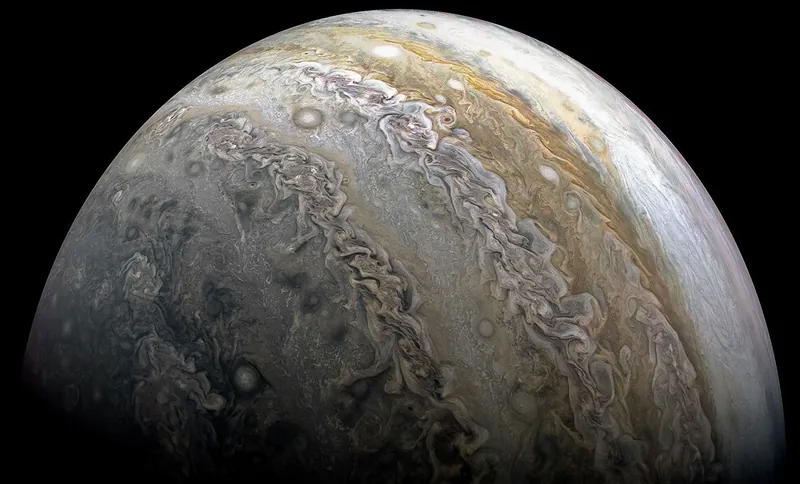
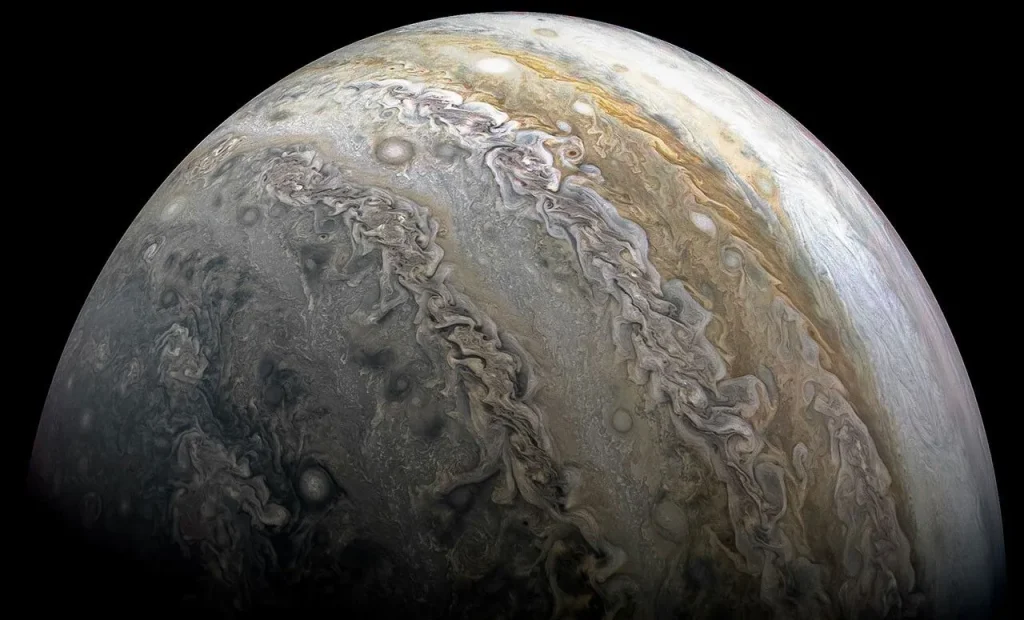
NASA’s Juno mission completed its 50th close pass by Jupiter on April 8, 2023. Since the spacecraft arrived at the giant planet in 2016, its JunoCam imager has captured spectacular views of Jupiter, and its large moons Ganymede, Europa, and Io. Many of those images were processed by volunteers called citizen scientists.
To mark the 50th close pass, NASA teamed up with Google Arts & Culture to feature a selection of JunoCam images. You can see the Google Arts & Culture feature here.
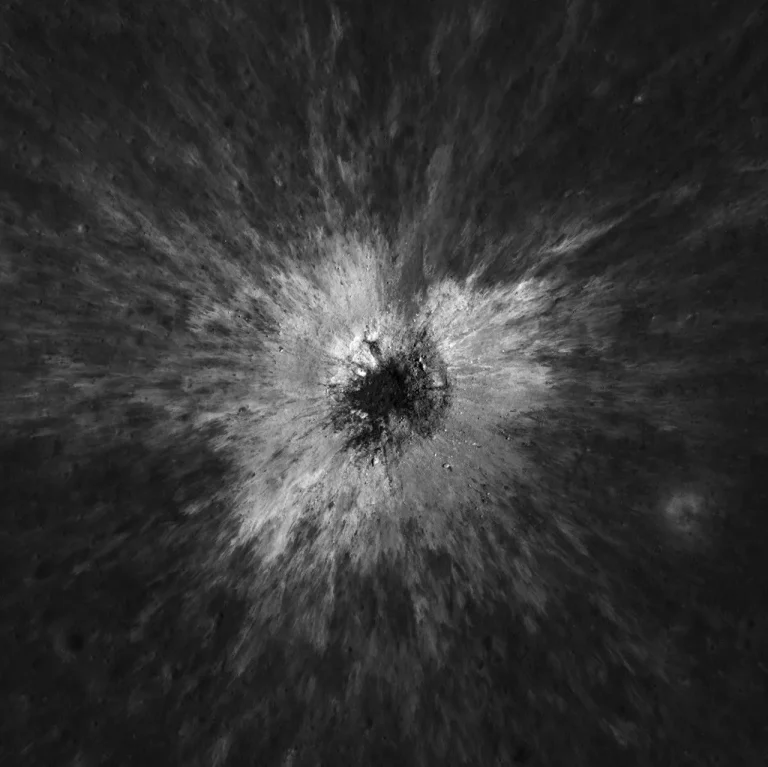
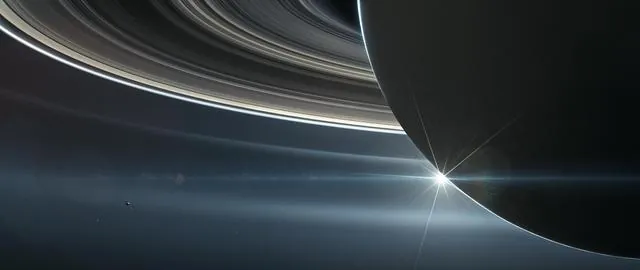
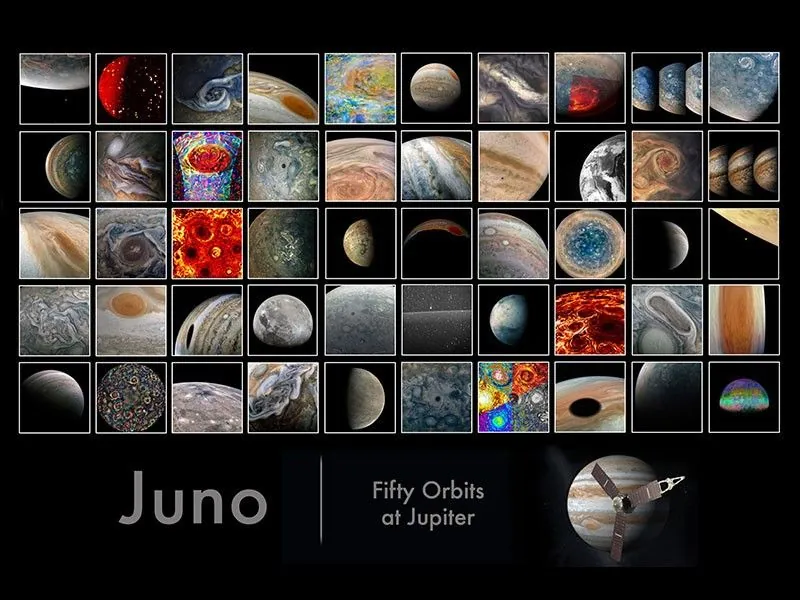
Also, we created a graphic with 50 images that provide a small sampling of the data Juno has returned so far, including images from several different instruments, and spectacular views of Earth, Jupiter, and Jupiter’s large moons Ganymede, Europa, and Io.
Learn more about the Juno mission and JunoCam.
Share
Details
Last Updated
Nov 06, 2024
Related Terms
Explore More
2 min read
10 Things: Movie Night
Article
13 hours ago
3 min read
What’s Up: October 2026 Skywatching Tips from NASA
Article
21 hours ago
2 min read
October’s Night Sky Notes: Spooky Stargazing
Article
4 days ago
Keep Exploring
Discover More Topics From NASA
Sun
Facts About Earth
Asteroids, Comets & Meteors
Kuiper Belt
Source: NASA Science