Tag: Galaxies, Stars, & Black Holes Research
-
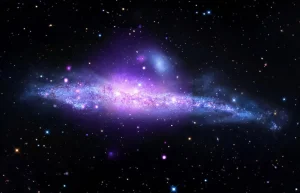
Galactic Gems Glisten in New Gallery From NASA’s Chandra
Galaxies are like cosmic gems, each with characteristics including size and shape that make them distinct. A new gallery released today from NASA’s Chandra X-ray Observatory and other telescopes displays a collection of galactic images that showcase this variety. Astronomers…
-
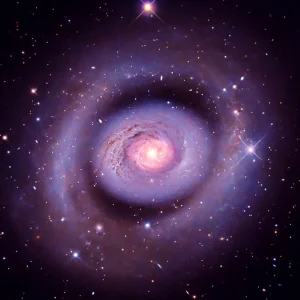
NASA’s Chandra Reveals ‘Red, White, Blue’ Universe for US 250th
In celebration of the 250th birthday of the United States, NASA has unveiled four cosmic images from its Chandra X-ray Observatory rendered in red, white, and blue that represent the wonders of the universe the agency explores. The images are…
-
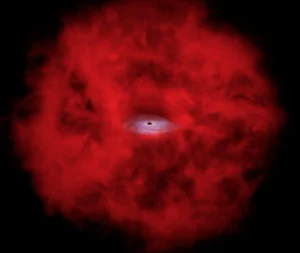
NASA Connects Little Red Dots with Chandra, Webb
A newly discovered object may be a key to unlocking the true nature of a mysterious class of sources that astronomers have found in the early universe in recent years. A “X-ray dot” found by NASA’s Chandra X-ray Observatory could…
-
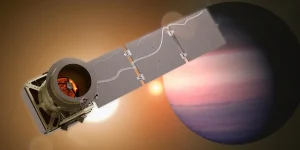
NASA’s Pandora Satellite, CubeSats to Explore Exoplanets, Beyond
A new NASA spacecraft called Pandora is launching to study the atmospheres of exoplanets and their stars.
-
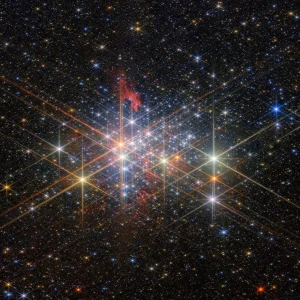
NASA’s Fermi Spots Young Star Cluster Blowing Gamma-Ray Bubbles
For the first time, astronomers using NASA’s Fermi Gamma-ray Space Telescope have traced a budding outflow of gas from a cluster of young stars in our galaxy — insights that help us understand how the universe has evolved as NASA…
-
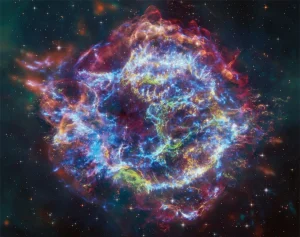
NASA-JAXA XRISM Finds Elemental Bounty in Supernova Remnant
For the first time, scientists have made a clear X-ray detection of chlorine and potassium in the wreckage of a star using data from the Japan-led XRISM (X-ray Imaging and Spectroscopy Mission) spacecraft. The Resolve instrument aboard XRISM, pronounced “crism,”…
-
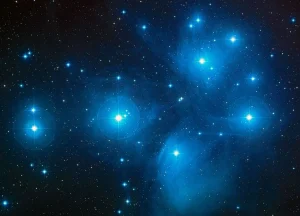
NASA’s TESS Spacecraft Triples Size of Pleiades Star Cluster
Astronomers have revolutionized our understanding of a collection of stars in the northern sky called the Pleiades. They used data from NASA’s TESS (Transiting Exoplanet Survey Satellite) and other observatories as NASA explores the secrets of the universe for the…
-
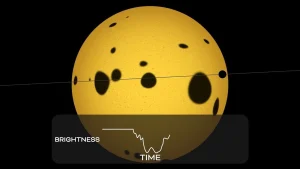
Astronomers Map Stellar ‘Polka Dots’ Using NASA’s TESS, Kepler
Scientists have devised a new method for mapping the spottiness of distant stars by using observations from NASA missions of orbiting planets crossing their stars’ faces. The model builds on a technique researchers have used for decades to study star…
-
NASA’s NICER Maps Debris From Recurring Cosmic Crashes
Lee esta nota de prensa en español aquí. For the first time, astronomers have probed the physical environment of repeating X-ray outbursts near monster black holes thanks to data from NASA’s NICER (Neutron star Interior Composition Explorer) and other missions.…