Tag: Gamma-Ray Bursts
-
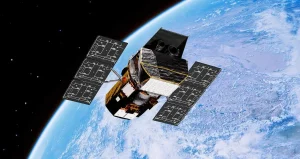
NASA Highlights Lessons Learned From Swift Boost Mission
A commercial mission to boost NASA’s Swift observatory concluded without raising the spacecraft’s orbit, but the agency and industry vendor gained valuable experience that will benefit future in-space servicing programs.
-
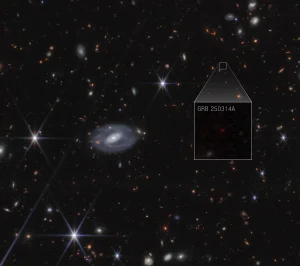
NASA’s Webb Identifies Earliest Supernova to Date, Shows Host Galaxy
NASA’s James Webb Space Telescope has observed a supernova that exploded when the universe was only 730 million years old — the earliest detection of its kind to date. Webb’s crisp near-infrared images also allowed astronomers to locate the supernova’s…
-
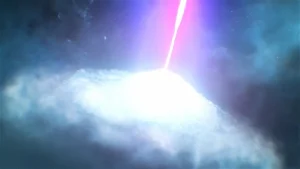
Black Hole Eats Star: NASA Missions Discover Record-Setting Blast
Editor’s note, Dec. 11, 2025: This story was updated to include an additional partner’s research and related release. Astronomers have been poring over a flood of data from NASA satellites and other facilities as they try to work out what…
-
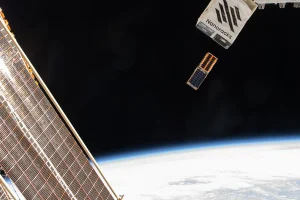
NASA’s Mini BurstCube Mission Detects Mega Blast
Editor’s note: BurstCube re-entered Earth’s atmosphere on Sept. 16, 2024, marking the end of the mission. The shoebox-sized BurstCube satellite has observed its first gamma-ray burst, the most powerful kind of explosion in the universe, according to a recent analysis…
-
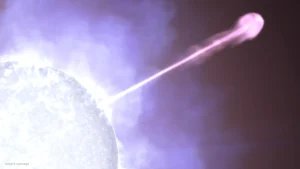
NASA’s Fermi Finds New Feature in Brightest Gamma-Ray Burst Yet Seen
In October 2022, astronomers were stunned by what was quickly dubbed the BOAT — the brightest-of-all-time gamma-ray burst (GRB). Now an international science team reports that data from NASA’s Fermi Gamma-ray Space Telescope reveals a feature never seen before. “A…
-
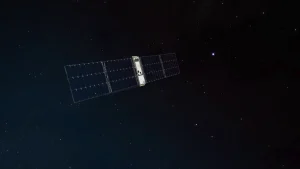
NASA’s Tiny BurstCube Mission Launches to Study Cosmic Blasts
Editor’s note, April 18, 2024: BurstCube deployed into orbit from the space station April 18, 2024. It will begin a one-month commissioning period before the start of science operations. NASA’s BurstCube, a shoebox-sized satellite designed to study the universe’s most…