Tag: Gamma Rays
-
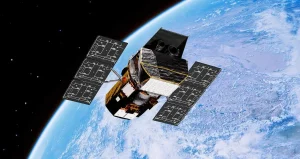
NASA Highlights Lessons Learned From Swift Boost Mission
A commercial mission to boost NASA’s Swift observatory concluded without raising the spacecraft’s orbit, but the agency and industry vendor gained valuable experience that will benefit future in-space servicing programs.
-
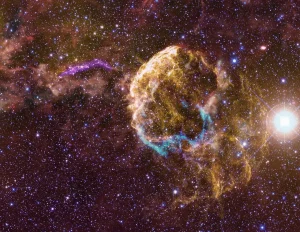
NASA’s Fermi Mission Uncovers Possible Sibling Supernova Remnants
A new study of two supernova remnants, the debris left behind after stars explode, suggests the explosions came from stellar siblings that once orbited each other. The first star’s detonation sent its binary companion hurtling through space, and then, after…
-
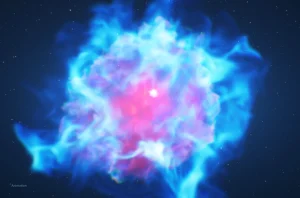
NASA’s Fermi Glimpses Power Source of Supercharged Supernovae
An international team studying data from NASA’s Fermi Gamma-ray Space Telescope concludes the mission detected a rare, unusually luminous supernova. The researchers say it likely received its power-up from a supermagnetized neutron star born in the stellar collapse that triggered…
-
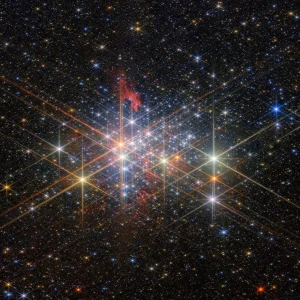
NASA’s Fermi Spots Young Star Cluster Blowing Gamma-Ray Bubbles
For the first time, astronomers using NASA’s Fermi Gamma-ray Space Telescope have traced a budding outflow of gas from a cluster of young stars in our galaxy — insights that help us understand how the universe has evolved as NASA…
-
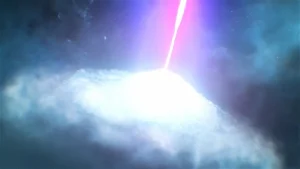
Black Hole Eats Star: NASA Missions Discover Record-Setting Blast
Editor’s note, Dec. 11, 2025: This story was updated to include an additional partner’s research and related release. Astronomers have been poring over a flood of data from NASA satellites and other facilities as they try to work out what…
-
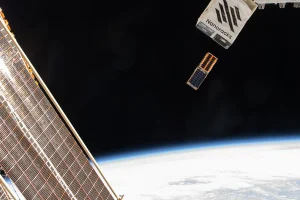
NASA’s Mini BurstCube Mission Detects Mega Blast
Editor’s note: BurstCube re-entered Earth’s atmosphere on Sept. 16, 2024, marking the end of the mission. The shoebox-sized BurstCube satellite has observed its first gamma-ray burst, the most powerful kind of explosion in the universe, according to a recent analysis…
-
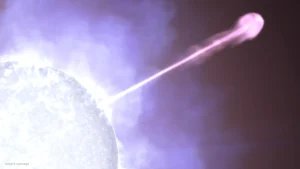
NASA’s Fermi Finds New Feature in Brightest Gamma-Ray Burst Yet Seen
In October 2022, astronomers were stunned by what was quickly dubbed the BOAT — the brightest-of-all-time gamma-ray burst (GRB). Now an international science team reports that data from NASA’s Fermi Gamma-ray Space Telescope reveals a feature never seen before. “A…
-
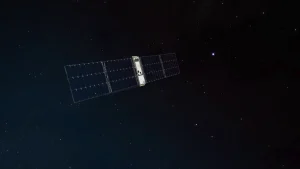
NASA’s Tiny BurstCube Mission Launches to Study Cosmic Blasts
Editor’s note, April 18, 2024: BurstCube deployed into orbit from the space station April 18, 2024. It will begin a one-month commissioning period before the start of science operations. NASA’s BurstCube, a shoebox-sized satellite designed to study the universe’s most…