Tag: Planetary Environments & Atmospheres
-
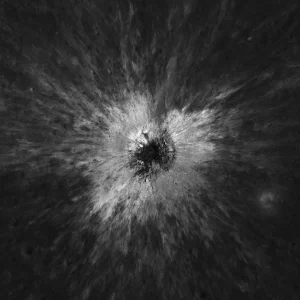
NASA’s Moon Orbiter Spots New, ‘Once-in-Century’ Moon Crater
It started as a routine data-quality check. But as Robert Wagner, a scientist with NASA’s Lunar Reconnaissance Orbiter (LRO), scanned a giant Moon map on his computer screen, an unusually large bright spot circled by a dark halo caught his…
-
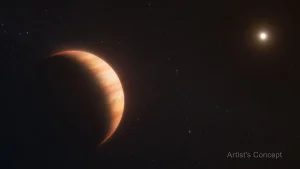
NASA’s Webb Studies How Planet Survived Death of its Star
NASA’s James Webb Space Telescope is giving us new insight into the far-future of solar systems like our own, as the agency continues to reveal the secrets of the universe and our place in it. Billions of years ago, a…
-
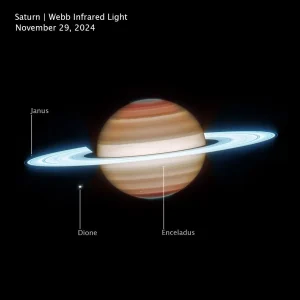
NASA Webb, Hubble Share Most Comprehensive View of Saturn to Date
NASA’s James Webb Space Telescope and Hubble Space Telescope have teamed up to capture new views of Saturn, revealing the planet in strikingly different ways. Observing in complementary wavelengths of light, the two space observatories provide scientists with a richer,…
-
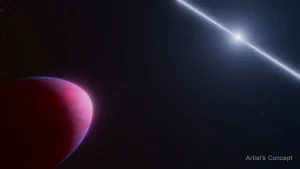
NASA’s Webb Observes Exoplanet Whose Composition Defies Explanation
Scientists using NASA’s James Webb Space Telescope have observed a rare type of exoplanet, or planet outside our solar system, whose atmospheric composition challenges our understanding of how it formed. Officially named PSR J2322-2650b, this Jupiter-mass object appears to have…
-
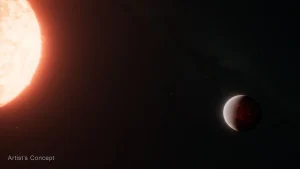
NASA’s Webb Detects Thick Atmosphere Around Broiling Lava World
Researchers using NASA’s James Webb Space Telescope have detected the strongest evidence yet for an atmosphere on a rocky planet outside our solar system, as NASA leads the world in exploring the universe from the Moon to Mars and beyond.
-
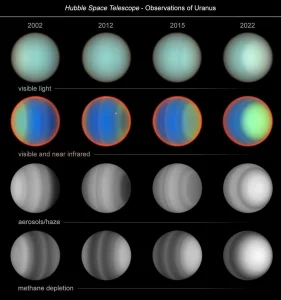
20-Year Hubble Study of Uranus Yields New Atmospheric Insights
The ice-giant planet Uranus, which travels around the Sun tipped on its side, is a weird and mysterious world. Now, in an unprecedented study spanning two decades, researchers using NASA’s Hubble Space Telescope have uncovered new insights into the planet’s…
-
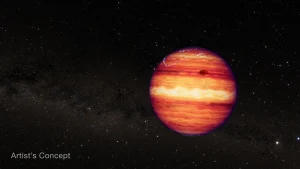
NASA’s Webb Exposes Complex Atmosphere of Starless Super-Jupiter
An international team of researchers has discovered that previously observed variations in brightness of a free-floating planetary-mass object known as SIMP 0136 must be the result of a complex combination of atmospheric factors, and cannot be explained by clouds alone.…
-
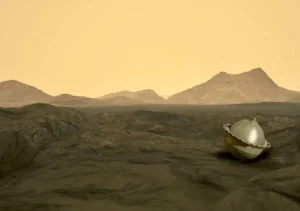
NASA DAVINCI Mission’s Many ‘Firsts’ to Unlock Venus’ Hidden Secrets
NASA’s DAVINCI probe will be first in the 21st century to brave Venus’ atmosphere as it descends from above the planet down to its surface.
-
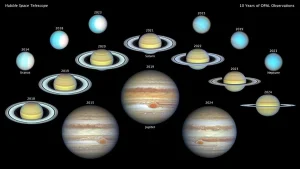
NASA’s Hubble Celebrates Decade of Tracking Outer Planets
Encountering Neptune in 1989, NASA’s Voyager mission completed humankind’s first close-up exploration of the four giant outer planets of our solar system. Collectively, since their launch in 1977, the twin Voyager 1 and Voyager 2 spacecraft discovered that Jupiter, Saturn,…
-
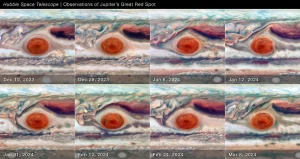
NASA’s Hubble Watches Jupiter’s Great Red Spot Behave Like a Stress Ball
Astronomers have observed Jupiter’s legendary Great Red Spot (GRS), an anticyclone large enough to swallow Earth, for at least 150 years. But there are always new surprises – especially when NASA’s Hubble Space Telescope takes a close-up look at it.…