Tag: Planetary Science
-
NASA-Funded Research Finds Complex Life Defying Record Heat
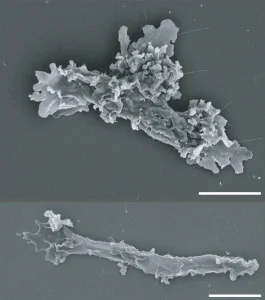
Lee esta historia en español aquí. NASA-supported scientists have discovered an organism that lives at extreme temperatures previously thought impossible for complex life. High temperatures can cause the destruction of necessary cell components, which is a big problem for cells…
-
NASA’s Moon Orbiter Spots New, ‘Once-in-Century’ Moon Crater
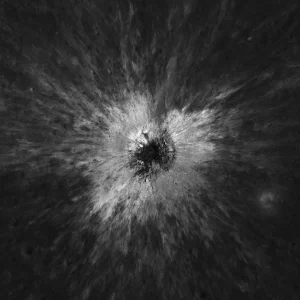
It started as a routine data-quality check. But as Robert Wagner, a scientist with NASA’s Lunar Reconnaissance Orbiter (LRO), scanned a giant Moon map on his computer screen, an unusually large bright spot circled by a dark halo caught his…
-
Human-Related Microbes May Survive Moon’s South Pole, NASA Finds
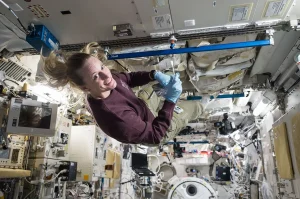
Lee esta historia en español aquí. Some of Earth’s microbes likely to hitch a ride to space with human explorers could survive in the shaded nooks and crannies of the Moon’s South Pole region, NASA scientists say. Published on Aug.…
-
NASA’s LRO Images Falcon 9 Crater on Moon, Learns New Details
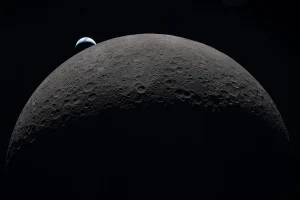
Between Aug. 11 and 12, NASA’s Lunar Reconnaissance Orbiter (LRO) captured a series of images of a new crater on the Moon. The crater formed on Aug. 5, when a SpaceX Falcon 9 upper stage impacted the surface following its…
-
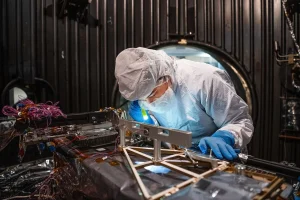
NASA Completes Astronaut-Deployed Science Instrument for Lunar Surface
NASA has declared “wrenches down” on the first completed payload designed for Artemis astronauts to deploy on the Moon’s surface. Engineers working on NASA’s Lunar Environment Monitoring Station, or LEMS, have completed hardware development and testing and the payload is…
-
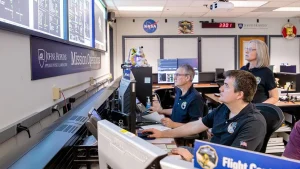
NASA’s New Horizons Spacecraft Wakes from Hibernation in Good Health
Following its longest hibernation period ever of nearly a year, NASA’s New Horizons spacecraft has emerged in good health and is ready to begin transmitting science data gathered in the distant Kuiper Belt far beyond Pluto. On June 23, flight…
-
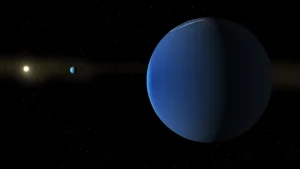
NASA’s TESS Mission Reveals the “Puffiest” Planets Ever Found
NASA has revealed two new “super-puff” planets, giant worlds so light that their density is comparable to cotton candy. Scientists calculate that these Jupiter-sized planets are the “puffiest” worlds ever found.
-
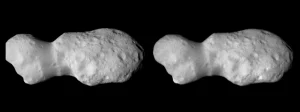
NASA’s Lucy Reveals Wobbling, Peanut-Shaped Asteroid
Even small asteroids lead complex lives. During its flyby of the asteroid Donaldjohanson last year, NASA’s Lucy spacecraft revealed the asteroid to be a wobbly, peanut-shaped body that has undergone a lot of activity in its relatively short history.
-
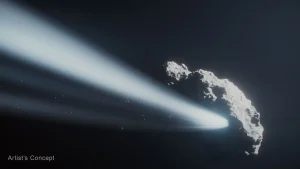
NASA’s Hubble Detects First-Ever Spin Reversal of Tiny Comet
Astronomers using NASA’s Hubble Space Telescope have found evidence that the spinning of a small comet slowed and then reversed its direction of rotation, offering a dramatic example of how volatile activity can affect the spin and physical evolution of…
-
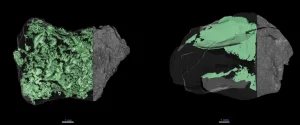
Asteroid Bennu’s Rugged Surface Baffled NASA, We Finally Know Why
In one of the biggest surprises of NASA’s OSIRIS-REx mission, its target asteroid, Bennu, turned out to be a jagged, rugged world covered in large boulders, with few of the smooth patches of sandy or pebbly material scientists had expected…