Tag: Skywatching
-
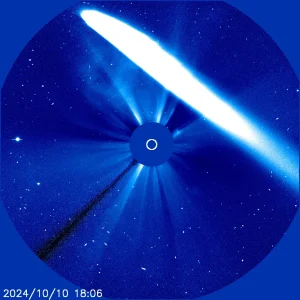
ESA/NASA’s SOHO Spies Bright Comet Making Debut in Evening Sky
The Solar and Heliospheric Observatory (SOHO) has captured images of the second-brightest comet to ever pass through its field of view, comet C/2023 A3 Tsuchinshan-ATLAS.
-
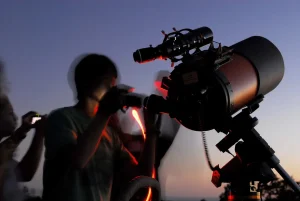
What’s Up: October 2024 Skywatching Tips from NASA
A new comet is passing through the inner solar system! Time will tell if it’s the brightest of the year, once it appears in twilight after about Oct. 14.
-
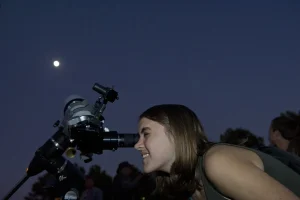
What’s Up: September 2024 Skywatching Tips from NASA
A partial lunar eclipse makes the full supermoon on Sept. 17th extra super. Also, chances to observe five planets this month, and a global night for observing.
-
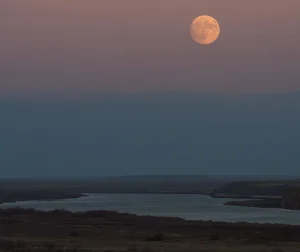
Super Blue Moons: Your Questions Answered
The Moon of August 30-31, 2023, is a full moon, a supermoon, and a blue moon. Here’s what it all means.
-

What’s Up: August 2024 Skywatching Tips from NASA
Two planets meet for a super close conjunction, the Perseid meteor shower peaks, and look for the Lagoon Nebula – a stellar nursery in Sagittarius.
-
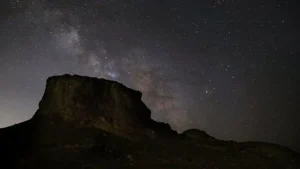
What’s Up: July 2024 Skywatching Tips from NASA
What to Look for in July The scorpion’s star clusters, and Mars reveals elusive Uranus Follow the tail of Scorpius to locate star clusters M6 and M7, let Mars guide you to observe planet Uranus, and see the Moon gather…
-
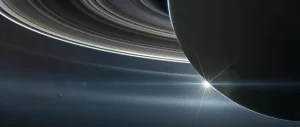
What’s Up: June 2024 Skywatching Tips from NASA
Planets rule the a.m., and what’s that bright light? Saturn and Mars meet up with the Moon, Jupiter returns at dawn, and tips for identifying some common objects seen in the sky. Highlights “Planet Parade” note: Some online sources have…
-
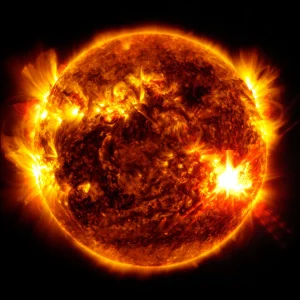
How NASA Tracked the Most Intense Solar Storm in Decades
May 2024 has already proven to be a particularly stormy month for our Sun. During the first full week of May, a barrage of large solar flares and coronal mass ejections (CMEs) launched clouds of charged particles and magnetic fields…
-

What’s Up: May 2024 Skywatching Tips from NASA
What to look for: Morning Meteors and May Planets See Mars, Saturn, and Mercury in the May morning sky. Antares slips behind the Moon for East Coast U.S. skywatchers. And the eta Aquariid meteors peak May 6th. Transcript What’s Up…
-
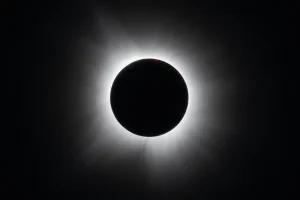
The April 8 Total Solar Eclipse: Through the Eyes of NASA
On April 8, 2024, the Moon’s shadow swept across North America, treating millions to a breathtaking view of a total solar eclipse. As the Moon passed in front of the Sun, it revealed the Sun’s wispy white outer atmosphere —…