Tag: Small Bodies of the Solar System
-
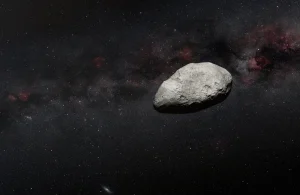
Webb Detects Extremely Small Main Belt Asteroid
An asteroid roughly the size of Rome’s Colosseum — between 300 to 650 feet (100 to 200 meters) in length — has been detected by an international team of European astronomers using NASA’s James Webb Space Telescope. Their project used…
-
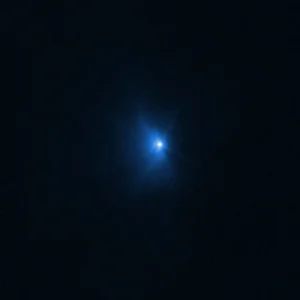
Webb, Hubble Capture Detailed Views of DART Impact
Two of NASA’s Great Observatories, the James Webb Space Telescope and the Hubble Space Telescope, have captured views of a unique NASA experiment designed to intentionally smash a spacecraft into a small asteroid in the world’s first-ever in-space test for…
-
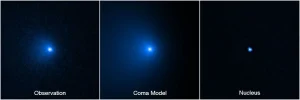
Hubble Confirms Largest Comet Nucleus Ever Seen
NASA’s Hubble Space Telescope has determined the size of the largest icy comet nucleus ever seen by astronomers. The estimated diameter is approximately 80 miles across, making it larger than the state of Rhode Island. The nucleus is about 50…
-
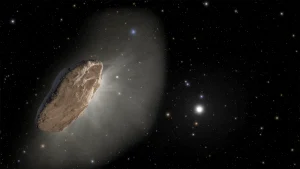
Studying the Next Interstellar Interloper with Webb
One of the most exciting findings in planetary science in recent years is the discovery of interstellar objects passing through our solar system. So far, astronomers have confirmed only two of these interlopers from other star systems — 1I/’Oumuamua in…
-
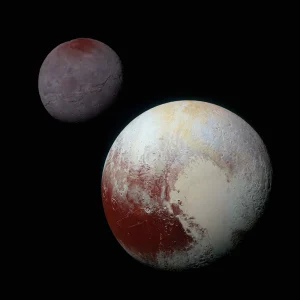
NASA’s Webb To Examine Objects in the Graveyard of the Solar System
Beyond the orbit of Neptune, a diverse collection of thousands of dwarf planets and other relatively small objects dwells in a region called the Kuiper Belt. These often-pristine leftovers from our solar system’s days of planet formation are called Kuiper…