Author: Alicia Cermak
-

Color Your Universe
All of NASA’s science missions are driven by powerful questions to help us better understand our planet, our solar system and beyond. What vibrant colors will you bring to these scenes of exploration?
-
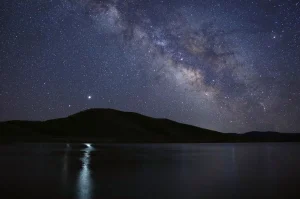
How to Photograph the Conjunction of Saturn and Jupiter
Tips for photographing the sky during December’s conjunction of Saturn and Jupiter
-
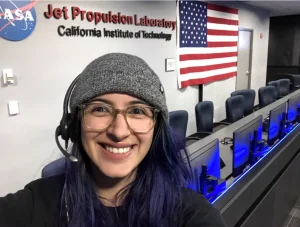
My Culture, My Voice
In honor of Hispanic Heritage Month, Christina Hernandez, an instrument engineer on the Mars 2020 mission, talks about her childhood and journey to NASA.
-
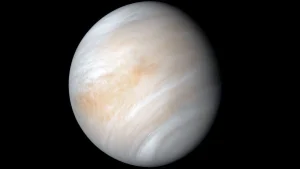
Announcement About Research on Venus’s Chemistry
Venus is proving to be an exciting place of discovery, though it had not been a significant part of the search for life because of its extreme temperatures, atmospheric composition and other factors.
-
Científicos descubren un nuevo fenomeno en las nubes de Venus
Las nubes de Venus albergan un nuevo fenómeno atmosférico nunca visto en nuestro sistema solar.
-
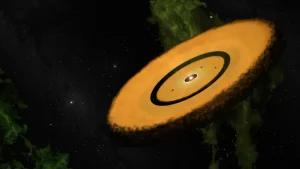
NASA Citizen Scientists Discover “Peter Pan Disks”
Scientists think planets, including the Earth, form inside giant disks of gas and dust that circle young stars. Observing these disks, called protoplanetary disks, teaches us how long it takes planets to form. Until recently astronomers thought that protoplanetary disks…
-
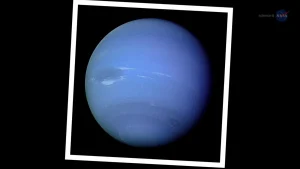
Neptune at Opposition
September is Best Time to Glimpse Elusive Ice Giant Opposition comes every September, and it’s not just kids who resist going back to school after summer vacation. September is also when the planet Neptune will be at opposition – an…
-
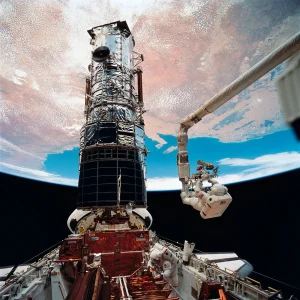
Hubble Celebrates 25 Years Since First Repair Mission in Space
On May 20, 1990, you could hear a pin drop as a room full of scientists waited breathlessly for the initial images from the first major optical telescope in space. As a few bright points of light set against the…
-
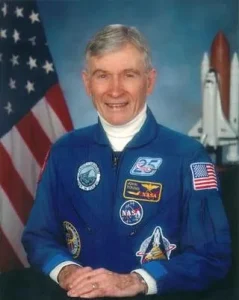
NASA Mourns the Passing of Astronaut John Young
Astronaut John Young, who walked on the Moon during Apollo 16 and commanded the first space shuttle mission, died Friday, Jan. 5, 2018, at the age of 87.
-
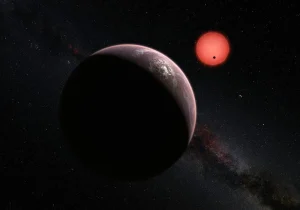
Promising Worlds Found Around Nearby Ultra-cool Dwarf Star
Astronomers using the TRAPPIST telescope at ESO’s La Silla Observatory have discovered three planets with sizes and temperatures similar to those of Venus and Earth, orbiting an ultra-cool dwarf star just 40 light-years from Earth.