Category: Solar System
-
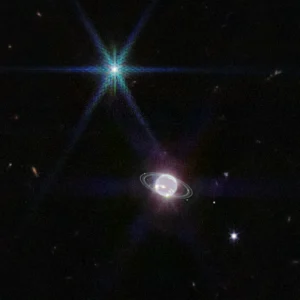
New Webb Image Captures Clearest View of Neptune’s Rings in Decades
NASA’s James Webb Space Telescope shows off its capabilities closer to home with its first image of Neptune. Not only has Webb captured the clearest view of this distant planet’s rings in more than 30 years, but its cameras reveal…
-
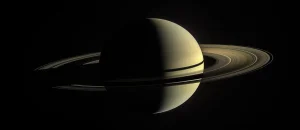
10 Things: Why Cassini Mattered
The Cassini spacecraft has been gone for a year now, but the science continues. Here are 10 reasons why Cassini mattered…
-
-
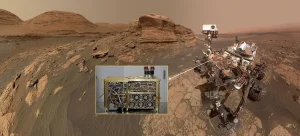
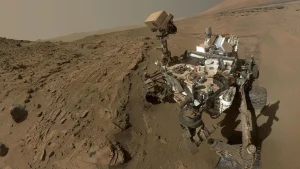
SAM’s Top 5 Discoveries Aboard NASA’s Curiosity Rover at Mars
“Selfie” of the Curiosity rover with inset showing the SAM instrument prior to installation on the rover.
-
10 Things: Dust in the Wind (on Mars and Well Beyond)
To most of us, dust is an annoyance. But these tiny particles that float about and settle on surfaces play an important role across the solar system.
-
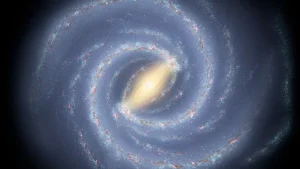
10 Things: Going Interstellar
Introduction Humanity’s great leap into interstellar space – the space between the stars – is underway. NASA’s Voyager 1 and Voyager 2 probes are both in interstellar space. For the moment, sending humans to the edge of interstellar space, let…
-

10 Things: What’s That Space Rock?
The path through the solar system is a rocky road. Asteroids, comets, Kuiper Belt Objects—all kinds of small bodies of rock, metal and ice are in constant motion as they orbit the Sun. But what’s the difference between them? Why…
-
Love spectacular photos of Jupiter? Become a Jovian Vortex Hunter!
Help astrophysicists analyze the stunning images from NASA’s Juno spacecraft! https://www.nasa.gov/mission_pages/juno/main/index.html A new NASA citizen science project, Jovian Vortex Hunter, seeks your help spotting vortices—spiral wind patterns—and other phenomena in gorgeous photos of the planet Jupiter. “There are so many…
-
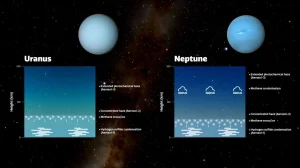
Why Uranus and Neptune Are Different Colors
Neptune and Uranus have much in common yet their appearances are notably different. Astronomers now have an explanation for why the two planets are different colors.
-
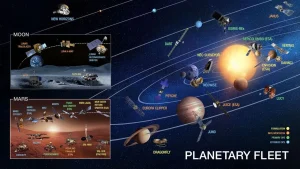
Exploration Extended for 8 Planetary Science Missions
NASA has extended the planetary science missions of eight of its spacecraft due to their scientific productivity and potential to deepen our knowledge.