1 min read
Hubble Captures New View of Colorful Veil
Download this image
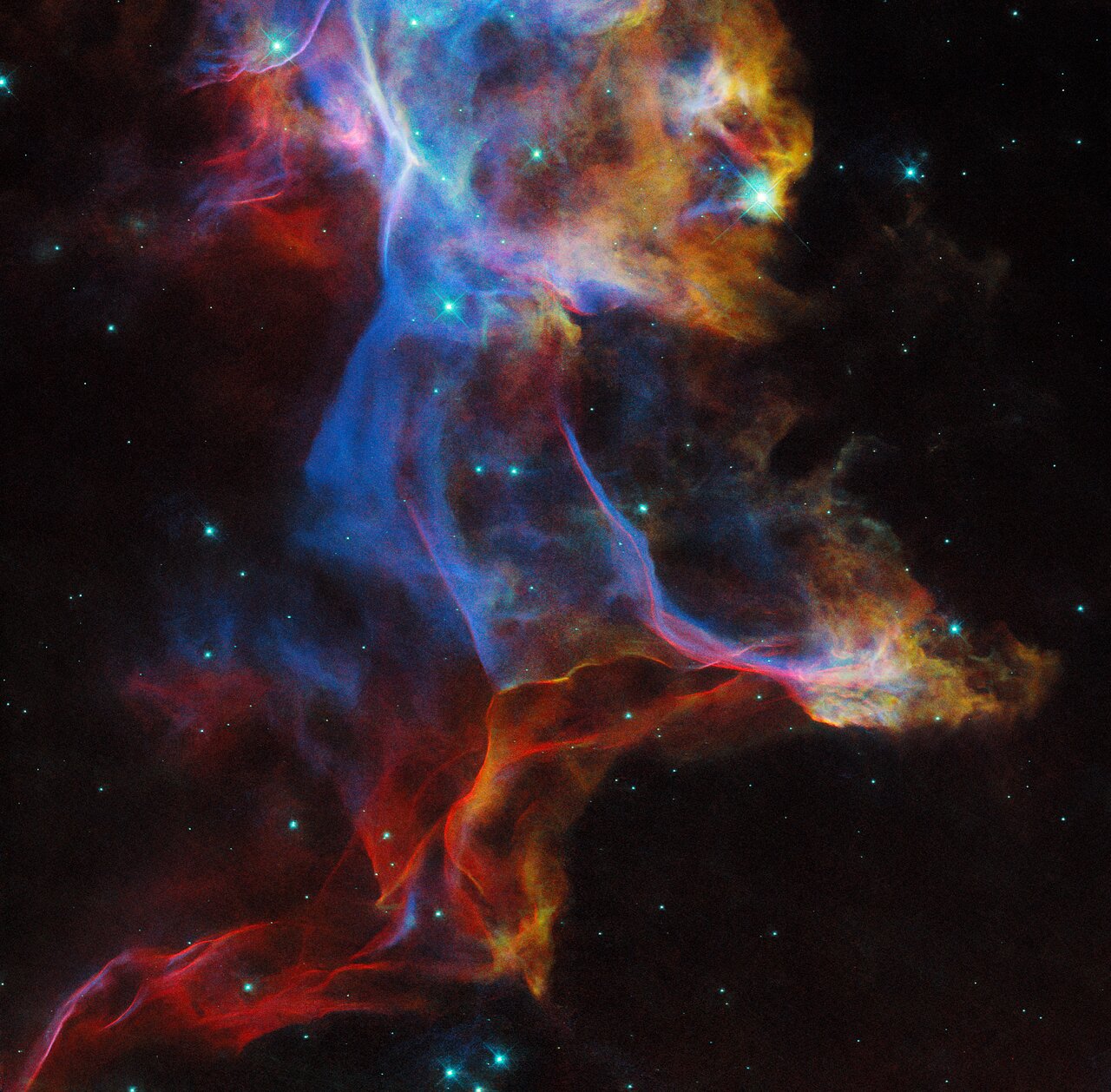
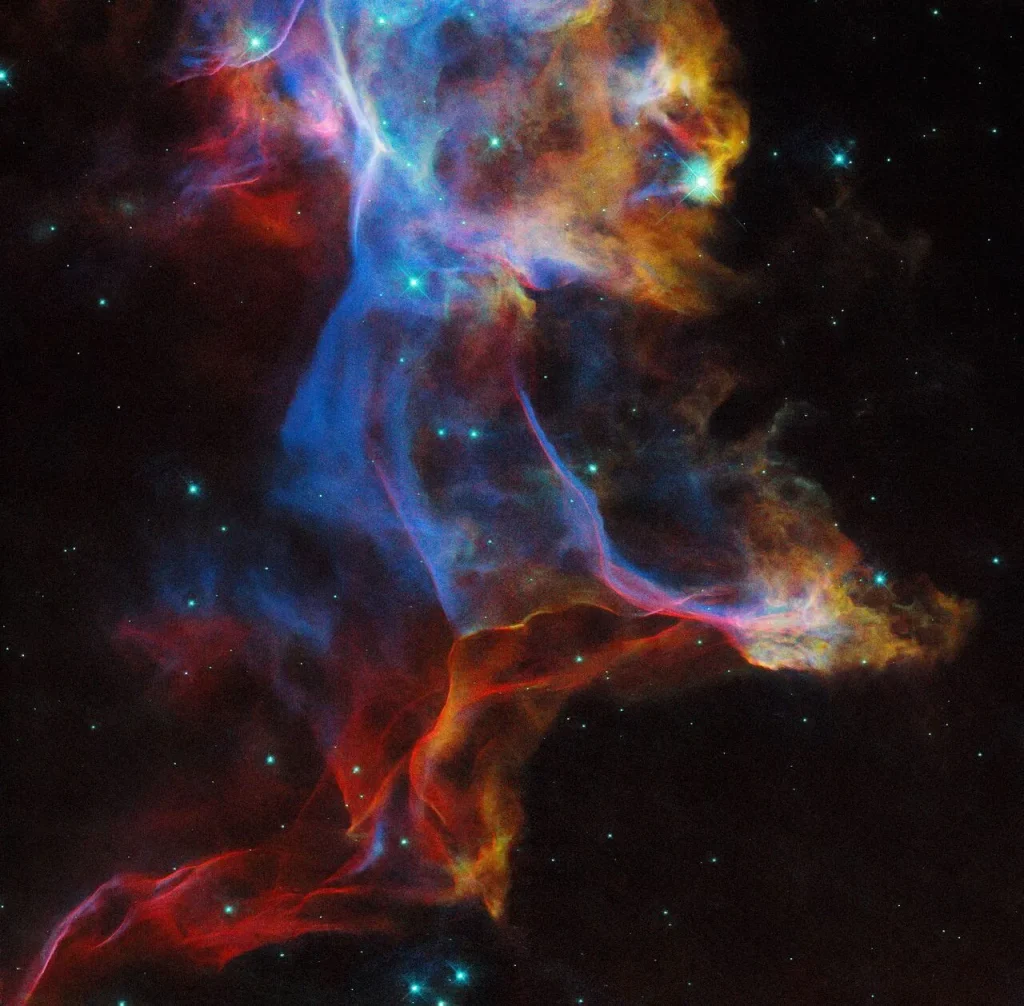
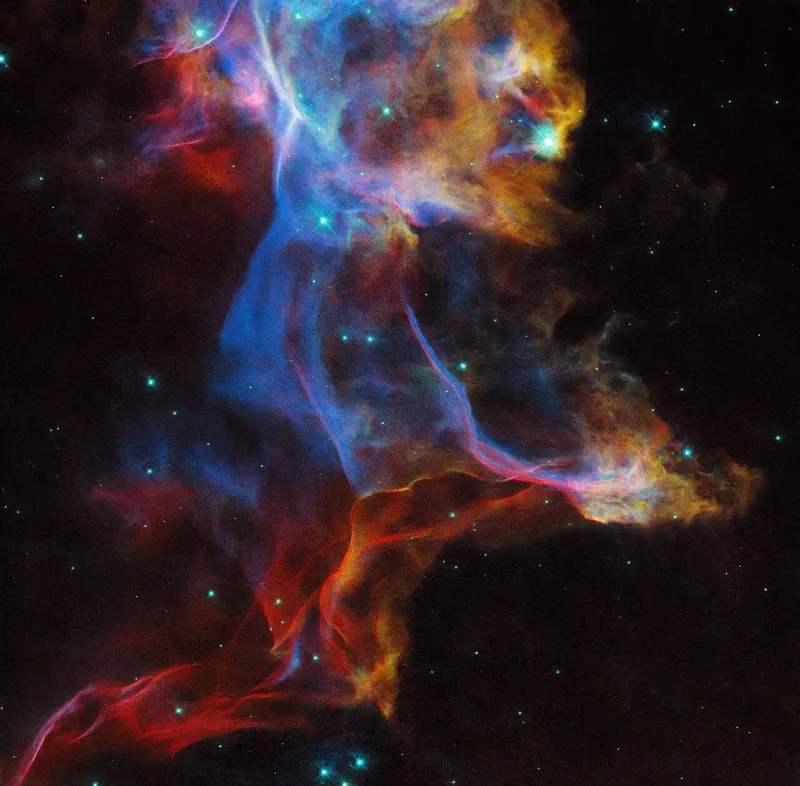
In this NASA/ESA Hubble Space Telescope image, Hubble once again lifts the veil on a famous — and frequently photographed — supernova remnant: the Veil Nebula. The remnant of a star roughly 20 times as massive as the Sun that exploded about 10,000 years ago, the Veil Nebula is situated about 2,400 light-years away in the constellation Cygnus. Hubble images of this photogenic nebula were first taken in 1994 and 1997, and again in 2015.
This view combines images taken in three different filters by Hubble’s Wide Field Camera 3, highlighting emission from hydrogen, sulfur, and oxygen atoms. The image shows just a small fraction of the Veil Nebula; if you could see the entire nebula without the aid of a telescope, it would be as wide as six full Moons placed side-by-side.
Although this image captures the Veil Nebula at a single point in time, it helps researchers understand how the supernova remnant evolves over decades. Combining this snapshot with Hubble observations from 1994 will reveal the motion of individual knots and filaments of gas over that span of time, enhancing our understanding of this stunning nebula.
@NASAHubble
@NASAHubble
@NASAHubble
Explore More
The Death Throes of Stars
Homing in on Cosmic Explosions
Media Contact:
Claire Andreoli (claire.andreoli@nasa.gov)NASA’s Goddard Space Flight Center, Greenbelt, MD
Share
Details
Last Updated
Mar 28, 2025
EditorAndrea GianopoulosLocationNASA Goddard Space Flight Center
Related Terms
- Hubble Space Telescope
- Astrophysics
- Astrophysics Division
- Goddard Space Flight Center
- Nebulae
- Supernova Remnants
Keep Exploring
Discover More Topics From Hubble
Hubble Space Telescope
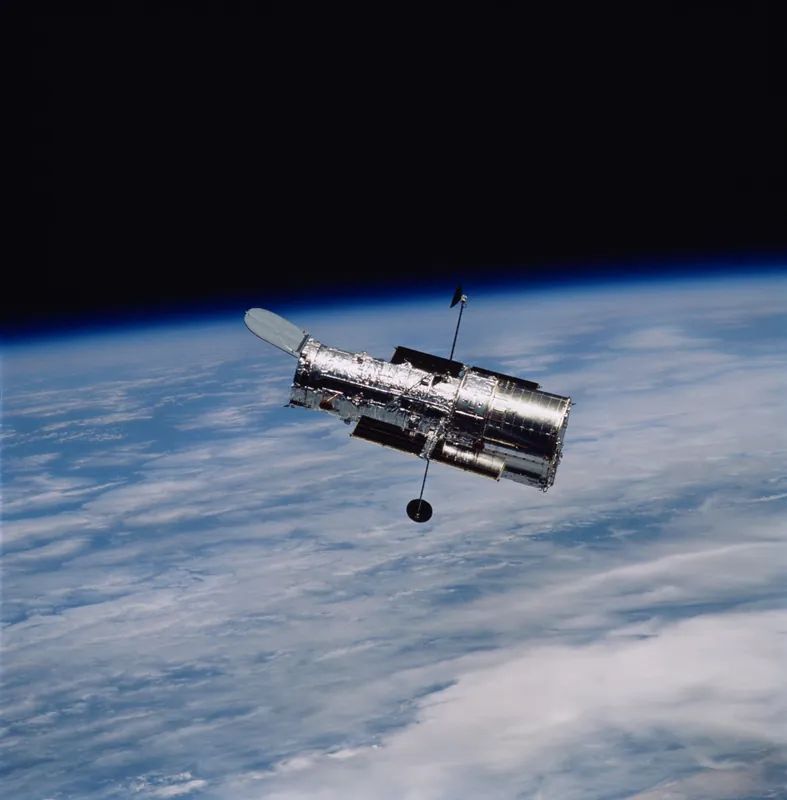
Since its 1990 launch, the Hubble Space Telescope has changed our fundamental understanding of the universe.
Reshaping Our Cosmic View: Hubble Science Highlights
Hubble’s Nebulae
These ethereal veils of gas and dust tell the story of star birth and death.
Hubble’s Night Sky Challenge
Source: NASA Science