Tag: Supernova Remnants
-
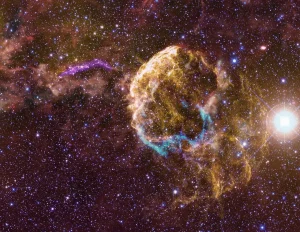
NASA’s Fermi Mission Uncovers Possible Sibling Supernova Remnants
A new study of two supernova remnants, the debris left behind after stars explode, suggests the explosions came from stellar siblings that once orbited each other. The first star’s detonation sent its binary companion hurtling through space, and then, after…
-
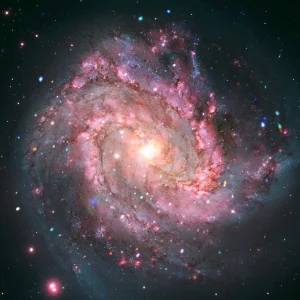
NASA’s Chandra Finds Unexpected Fireworks in Aftermath of Stellar Explosions
The aftermath of a supernova, a stellar explosion, is usually a slowly fading cloud of hot gas. So when astronomers pointed NASA’s Chandra X-ray Observatory at the nearby galaxy Messier 83 (M83), they did not expect to find a population…
-
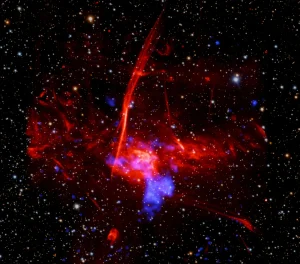
NASA’s Chandra Discovers Possible Supernova Remnant in Galactic Center
Using data from NASA’s Chandra X-ray Observatory, astronomers may have found a supernova remnant in an intriguing neighborhood in the middle of our galaxy. A paper describing these new findings published in The Astrophysical Journal. Supernova remnants are the expanding…
-
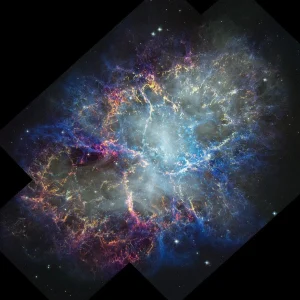
NASA’s Hubble Revisits Crab Nebula to Track 25 Years of Expansion
A quarter-century after its first observations of the full Crab Nebula, NASA’s Hubble Space Telescope has taken a fresh look at the supernova remnant. The result is an unparalleled, detailed look at the aftermath of a supernova and how it…
-
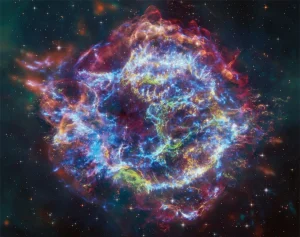
NASA-JAXA XRISM Finds Elemental Bounty in Supernova Remnant
For the first time, scientists have made a clear X-ray detection of chlorine and potassium in the wreckage of a star using data from the Japan-led XRISM (X-ray Imaging and Spectroscopy Mission) spacecraft. The Resolve instrument aboard XRISM, pronounced “crism,”…
-
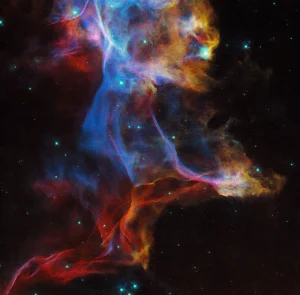
Hubble Captures New View of Colorful Veil
In this NASA/ESA Hubble Space Telescope image, Hubble once again lifts the veil on a famous — and frequently photographed — supernova remnant: the Veil Nebula. The remnant of a star roughly 20 times as massive as the Sun that…
-
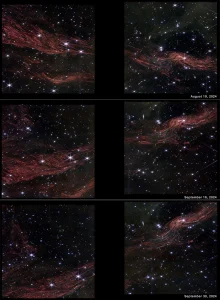
NASA’s Webb Reveals Intricate Layers of Interstellar Dust, Gas
Once upon a time, the core of a massive star collapsed, creating a shockwave that blasted outward, ripping the star apart as it went. When the shockwave reached the star’s surface, it punched through, generating a brief, intense pulse of…