4 min read
NASA’s Artemis II Lunar Science Operations to Inform Future Missions
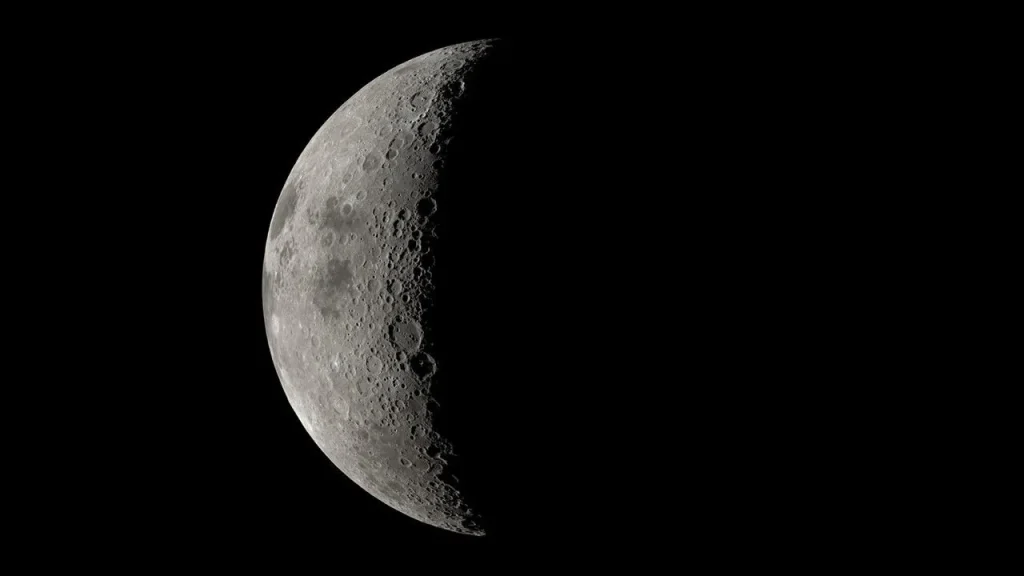
NASA’s Artemis II mission, set to send four astronauts on a nearly 10-day mission around the Moon and back, will advance the agency’s goal to land astronauts at the Moon’s south polar region and will help set the stage for future crewed Mars missions.
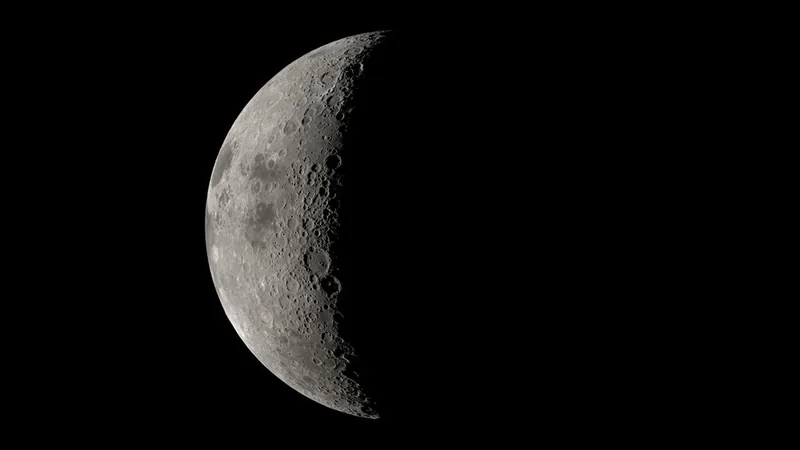
While the Artemis II crew will be the first humans to test NASA’s Orion spacecraft in space, they will also conduct science investigations that will inform future deep space missions, including a lunar science investigation as Orion flies about 4,000 to 6,000 miles from the Moon’s surface. From this distance, the Moon will appear to be the size of a basketball held at arm’s length and will provide a unique opportunity for scientific observations.
Artemis II is a chance for astronauts to implement the lunar science skills they’ve developed in training. It’s also an opportunity for scientists and the engineers in mission control to collaborate during real-time operations …
Kelsey Young
Artemis II lunar science lead at NASA’s Goddard Space Flight Center in Greenbelt, Maryland.
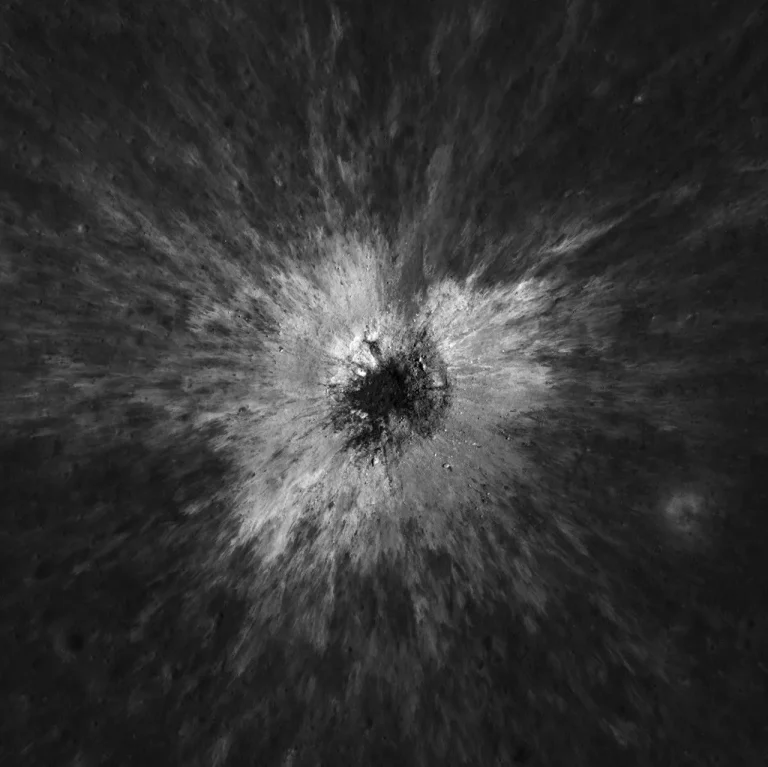
As Orion passes on the far side of the Moon — the side that always faces away from Earth — the crew will analyze and photograph geologic features on the surface, such as impact craters and ancient lava flows, relying on their extensive geology training in the classroom and in Moon-like places on Earth. The astronauts will also practice describing nuances in shapes, textures, and colors of surface features. This type of information reveals the geologic history of an area and will be critical to collect when Artemis III astronauts explore the surface.
“Artemis II is a chance for astronauts to implement the lunar science skills they’ve developed in training,” said Kelsey Young, Artemis II lunar science lead at NASA’s Goddard Space Flight Center in Greenbelt, Maryland. “It’s also an opportunity for scientists and the engineers in mission control to collaborate during real-time operations, building on the years of testing and simulations that our teams have done together.”
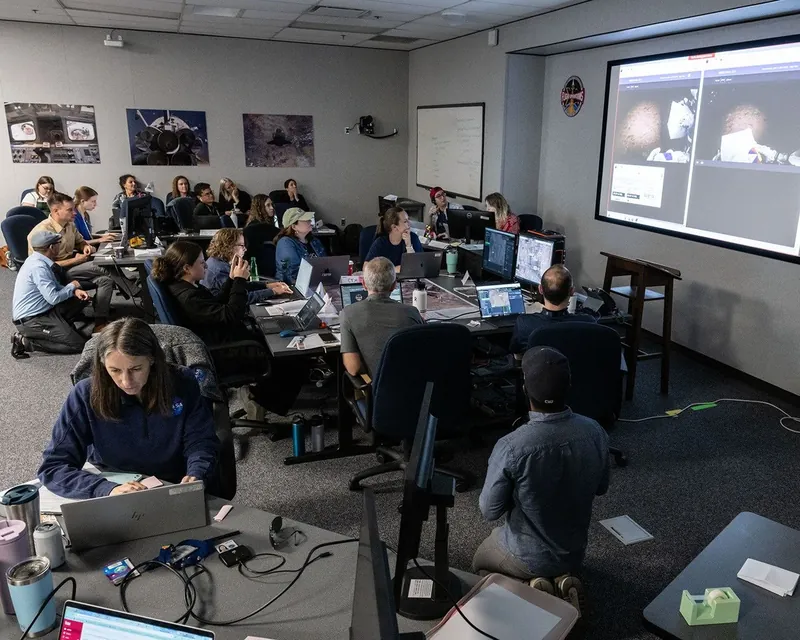
Young leads a team of scientists with expertise in impact cratering, volcanism, tectonism, and lunar ice, who will provide real-time data analysis and guidance to the Artemis II crew in space. During the mission, the lunar science team will be located in mission control’s Science Evaluation Room at NASA’s Johnson Space Center in Houston.
The four Artemis II astronauts, NASA’s Reid Wiseman, Victor Glover, and Christina Koch, and CSA’s (Canadian Space Agency) Jeremy Hansen, could be the first humans to see some parts of the Moon’s far side with the naked eye, depending on the spacecraft’s final trajectory as determined upon launch. During the nine Apollo missions that left Earth’s orbit, astronauts saw parts of the Moon’s far side, but not all of it, as they were limited by which sections were lit during their orbits.
One previously unlit region they may see is the Orientale Basin, a 600-mile-wide crater that serves as a transition point between the near and far side and is sometimes partly visible along the Moon’s western edge.
The astronauts may also get to observe flashes of light from space rocks striking the surface—clues that help reveal how often the Moon gets hit—or dust floating above the edge of the Moon, a mysterious phenomenon scientists want to understand.
To view this video please enable JavaScript, and consider upgrading to a web browser that
supports HTML5 video
This visualization simulates what the crew of Artemis II might see out the Orion windows on the day of their closest approach to the Moon. It compresses 36 hours into a little more than a minute as it flies the virtual camera on a realistic trajectory that swings the spacecraft around the Moon’s far side. This sample trajectory is timed so that the far side is fully illuminated when the astronauts fly by, but other lighting conditions are possible depending on the exact Artemis II launch date. The launch is scheduled for no later than April of 2026. Download here: https://svs.gsfc.nasa.gov/5536/NASA Goddard/Ernie Wright
The crew’s observations will help pave the way for lunar science activities on future Artemis missions to the Moon’s surface, including Artemis III. Artemis III astronauts will investigate the land forms, rocks, and other features around their landing site. They will also collect rock samples for generations of analyses in Earth labs and set up several instruments to investigate lunar properties and resources — information critical to future human exploration efforts.
“Whether they’re looking out the spacecraft’s windows or walking the surface, Artemis astronauts will be working on behalf of all scientists to collect clues to the ancient geologic processes that shaped the Moon and our solar system,” said Cindy Evans, NASA’s Artemis geology training and strategic integration lead, based at NASA Johnson.
In addition to lunar science observations, the crew will gather data on the effects of the space environment on the crew’s health and performance. These experiments will be managed through the Payload Mission Operations Directorate at NASA’s Marshall Space Flight Center, in Huntsville, Alabama, in tight coordination with mission control. This data could inform long-term lunar exploration and future human missions to Mars.
For more information on Artemis II, visit:
https://www.nasa.gov/mission/artemis-ii/
Related: Artemis II Lunar Science Multimedia Gallery
Karen Fox / Molly Wasser
Headquarters, Washington
202-358-1600
karen.c.fox@nasa.gov / molly.l.wasser@nasa.gov
Lonnie Shekhtman
NASA’s Goddard Space Flight Center, Greenbelt, Md.
About the Author
Lonnie Shekhtman
Senior Science Writer
Shekhtman helps communicate NASA planetary science to the world through news and feature stories on NASA.gov, videos for NASA+ and YouTube, and by working with the media. She reports on lunar and Mars science and exploration; NASA’s search for life; missions to Venus, Titan, and Jupiter’s Trojan asteroids; and many other topics related to NASA’s exploration of our solar system and beyond.
Share
Details
Last Updated
Dec 19, 2025
Related Terms
- The Solar System
- Artemis
- Artemis 2
- Artemis 3
- Astronauts
- Earth’s Moon
- Goddard Space Flight Center
- Humans in Space
- Johnson Space Center
- Lunar Discovery & Exploration Program
- Lunar Science
- Marshall Space Flight Center
- Planetary Science
- Planetary Science Division
- Science & Research
- Science Mission Directorate
Explore More
2 min read
10 Things: Movie Night
Article
14 hours ago
3 min read
What’s Up: October 2026 Skywatching Tips from NASA
Article
21 hours ago
6 min read
NASA’s Webb Provides Crash Course on Planet-Shattering Collisions
Article
1 day ago
Keep Exploring
Discover More Topics From NASA
Missions
Humans in Space
Climate Change
Solar System
Source: NASA Science