Tag: Astrophysics
-
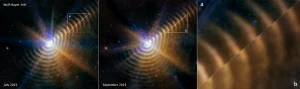
Webb Watches Carbon-Rich Dust Shells Form, Expand in Star System
Astronomers have long tried to track down how elements like carbon, which is essential for life, become widely distributed across the universe. Now, NASA’s James Webb Space Telescope has examined one ongoing source of carbon-rich dust in our own Milky…
-
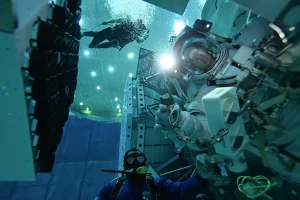
Astronaut Set to Patch NASA’s X-ray Telescope Aboard Space Station
NASA astronaut Nick Hague will install patches to the agency’s NICER (Neutron star Interior Composition Explorer) X-ray telescope on the International Space Station as part of a spacewalk scheduled for Jan. 16. Hague, along with astronaut Suni Williams, will also…
-
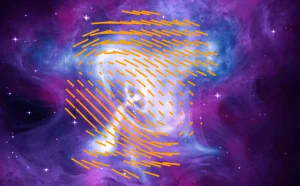
Revealing the Hidden Universe with Full-shell X-ray Optics at NASA MSFC
The study of X-ray emission from astronomical objects reveals secrets about the Universe at the largest and smallest spatial scales. Celestial X-rays are produced by black holes consuming nearby stars, emitted by the million-degree gas that traces the structure between…
-
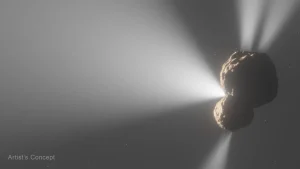
NASA’s Webb Reveals Unusual Jets of Volatile Gas from Icy Centaur 29P
Inspired by the half-human, half-horse creatures that are part of Ancient Greek mythology, the field of astronomy has its own kind of centaurs: distant objects orbiting the Sun between Jupiter and Neptune. NASA’s James Webb Space Telescope has mapped the…
-
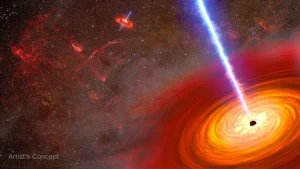
NASA’s Hubble, Chandra Find Supermassive Black Hole Duo
Like two Sumo wrestlers squaring off, the closest confirmed pair of supermassive black holes have been observed in tight proximity. These are located approximately 300 light-years apart and were detected using NASA’s Hubble Space Telescope and the Chandra X-ray Observatory.…
-
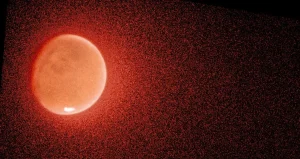
NASA’s Hubble, MAVEN Help Solve the Mystery of Mars’ Escaping Water
Mars was once a very wet planet as is evident in its surface geological features. Scientists know that over the last 3 billion years, at least some water went deep underground, but what happened to the rest? Now, NASA’s Hubble…
-
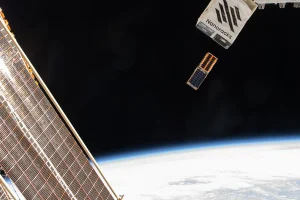
NASA’s Mini BurstCube Mission Detects Mega Blast
Editor’s note: BurstCube re-entered Earth’s atmosphere on Sept. 16, 2024, marking the end of the mission. The shoebox-sized BurstCube satellite has observed its first gamma-ray burst, the most powerful kind of explosion in the universe, according to a recent analysis…
-
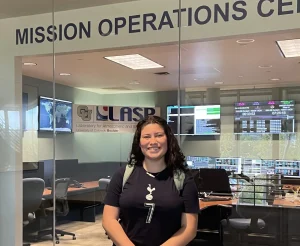
How Students Learn to Fly NASA’s IXPE Spacecraft
The large wall monitor displaying a countdown shows 17 seconds when Amelia “Mia” De Herrera-Schnering tells her teammates “We have AOS,” meaning “acquisition of signal.” “Copy that, thank you,” Alexander Pichler replies. The two are now in contact with NASA’s…
-
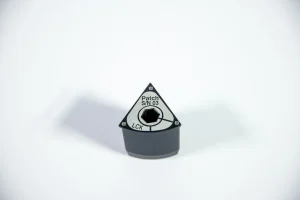
Repair Kit for NASA’s NICER Mission Heading to Space Station
Editor’s note: NG CRS-21 launched Aug. 4 from Cape Canaveral Space Force Station in Florida. The spacecraft was installed to the International Space Station Aug. 6. NASA will deliver a patch kit for NICER (Neutron star Interior Composition Explorer), an…
-
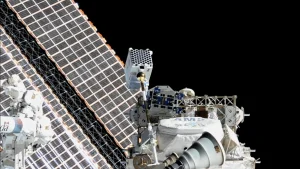
Astronauts To Patch Up NASA’s NICER Telescope
NASA is planning to repair NICER (Neutron star Interior Composition Explorer), an X-ray telescope on the International Space Station, during a spacewalk later this year. It will be the fourth science observatory in orbit serviced by astronauts. In May 2023,…