Tag: Astrophysics
-
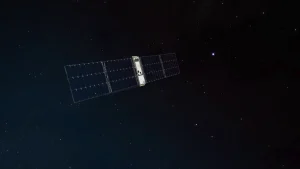
NASA’s Tiny BurstCube Mission Launches to Study Cosmic Blasts
Editor’s note, April 18, 2024: BurstCube deployed into orbit from the space station April 18, 2024. It will begin a one-month commissioning period before the start of science operations. NASA’s BurstCube, a shoebox-sized satellite designed to study the universe’s most…
-
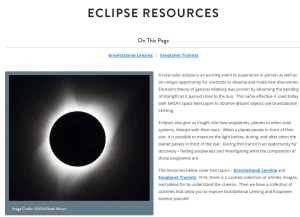
Eclipse Resources for Learners and Educators: Connecting the Eclipse to Astrophysics
In anticipation of the upcoming total solar eclipse on April 8, 2024, NASA’s Universe of Learning has created a webpage of astrophysics-related eclipse resources for learners and educators. The webpage shares information about two topics that align with eclipse science:…
-
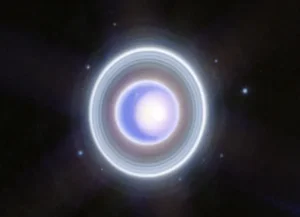
NASA’s Webb Rings in Holidays with Ringed Planet Uranus
NASA’s James Webb Space Telescope recently trained its sights on unusual and enigmatic Uranus, an ice giant that spins on its side. Webb captured this dynamic world with rings, moons, storms, and other atmospheric features – including a seasonal polar…
-

NASA’s GUSTO Prepares to Map Space Between the Stars
Editor’s Note: The GUSTO mission successfully launched on a scientific balloon from Antarctica Dec. 31, 7:30 p.m. local time (Dec. 31, 1:30 a.m EST). The balloon is floating 128,000 feet above Earth’s surface and can be tracked in real-time on…
-
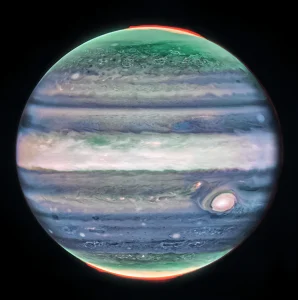
NASA’s Webb Discovers New Feature in Jupiter’s Atmosphere
NASA’s James Webb Space Telescope has discovered a new, never-before-seen feature in Jupiter’s atmosphere. The high-speed jet stream, which spans more than 3,000 miles (4,800 kilometers) wide, sits over Jupiter’s equator above the main cloud decks. The discovery of this…
-
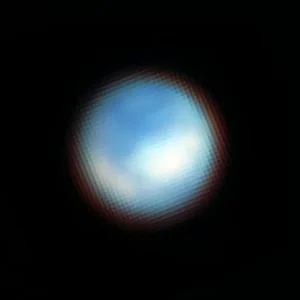
NASA’s Webb Finds Carbon Source on Surface of Jupiter’s Moon Europa
Jupiter’s moon Europa is one of a handful of worlds in our solar system that could potentially harbor conditions suitable for life. Previous research has shown that beneath its water-ice crust lies a salty ocean of liquid water with a…
-
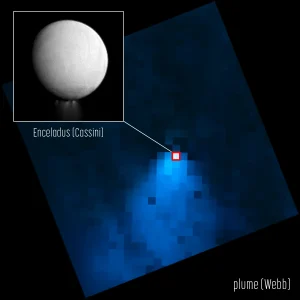
Webb Maps Surprisingly Large Plume Jetting From Saturn’s Moon Enceladus
A water vapor plume from Saturn’s moon Enceladus spanning more than 6,000 miles – nearly the distance from Los Angeles, California to Buenos Aires, Argentina – has been detected by researchers using NASA’s James Webb Space Telescope. Not only is…
-
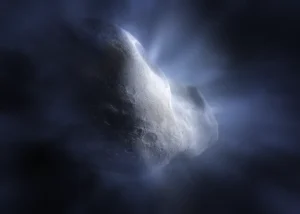
NASA’s Webb Finds Water, and a New Mystery, in Rare Main Belt Comet
NASA’s James Webb Space Telescope has enabled another long-sought scientific breakthrough, this time for solar system scientists studying the origins of Earth’s abundant water. Using Webb’s NIRSpec (Near-Infrared Spectrograph) instrument, astronomers have confirmed gas – specifically water vapor – around…
-
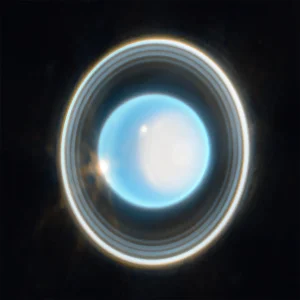
NASA’s Webb Scores Another Ringed World with New Image of Uranus
Following in the footsteps of the Neptune image released in 2022, NASA’s James Webb Space Telescope has taken a stunning image of the solar system’s other ice giant, the planet Uranus. The new image features dramatic rings as well as…
-
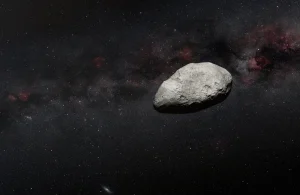
Webb Detects Extremely Small Main Belt Asteroid
An asteroid roughly the size of Rome’s Colosseum — between 300 to 650 feet (100 to 200 meters) in length — has been detected by an international team of European astronomers using NASA’s James Webb Space Telescope. Their project used…