Author: Andrea Gianopoulos
-
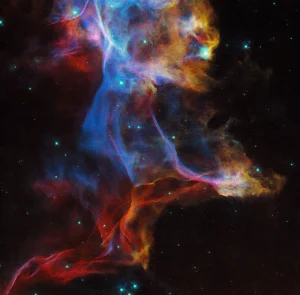
Hubble Captures New View of Colorful Veil
In this NASA/ESA Hubble Space Telescope image, Hubble once again lifts the veil on a famous — and frequently photographed — supernova remnant: the Veil Nebula. The remnant of a star roughly 20 times as massive as the Sun that…
-
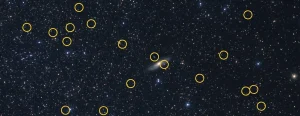
NASA’s Hubble Provides Bird’s-Eye View of Andromeda Galaxy’s Ecosystem
Located 2.5 million light-years away, the majestic Andromeda galaxy appears to the naked eye as a faint, spindle-shaped object roughly the angular size of the full Moon. What backyard observers don’t see is a swarm of nearly three dozen small…
-
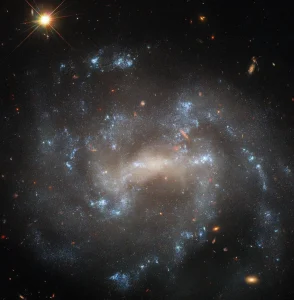
Hubble Spies a Spiral That May Be Hiding an Imposter
The sparkling spiral galaxy gracing this NASA/ESA Hubble Space Telescope image is UGC 5460, which sits about 60 million light-years away in the constellation Ursa Major. This image combines four different wavelengths of light to reveal UGC 5460’s central bar…
-
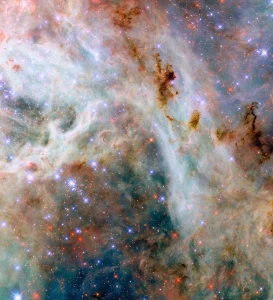
Hubble Captures a Cosmic Cloudscape
The universe is a dusty place, as this NASA/ESA Hubble Space Telescope image featuring swirling clouds of gas and dust near the Tarantula Nebula reveals. Located in the Large Magellanic Cloud about 160,000 light-years away in the constellations Dorado and…
-
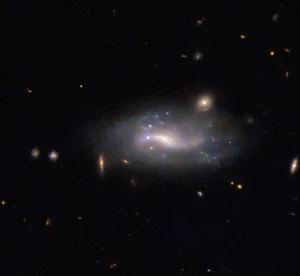
Hubble Goes Supernova Hunting
A supernova and its host galaxy are the subject of this NASA/ESA Hubble Space Telescope image. The galaxy in question is LEDA 132905 in the constellation Sculptor. Even at more than 400 million light-years away, LEDA 132905’s spiral structure is…
-
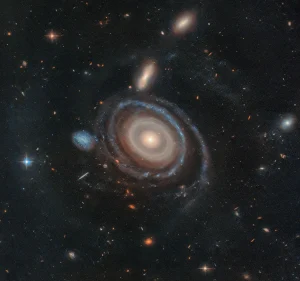
Straight Shot: Hubble Investigates Galaxy with Nine Rings
NASA’s Hubble Space Telescope has captured a cosmic bullseye! The gargantuan galaxy LEDA 1313424 is rippling with nine star-filled rings after an “arrow” — a far smaller blue dwarf galaxy — shot through its heart. Astronomers using Hubble identified eight…
-
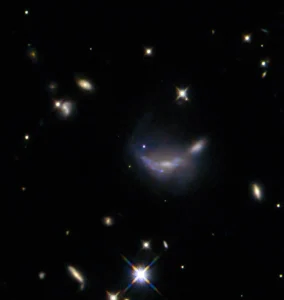
Hubble Spots a Supernova
The subject of this NASA/ESA Hubble Space Telescope image is a supernova-hosting galaxy located about 600 million light-years away in the constellation Gemini. Hubble captured this image roughly two months after a supernova named SN 2022aajn was discovered. The supernova…
-
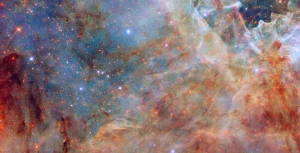
Hubble Studies the Tarantula Nebula’s Outskirts
This NASA/ESA Hubble Space Telescope image features a dusty yet sparkling scene from one of the Milky Way’s satellite galaxies, the Large Magellanic Cloud. The Large Magellanic Cloud is a dwarf galaxy situated about 160,000 light-years away in the constellations…
-
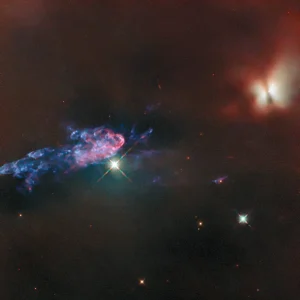
Hubble Captures Young Stars Changing Their Environments
This NASA/ESA Hubble Space Telescope image peers into the dusty recesses of the nearest massive star-forming region to Earth, the Orion Nebula (Messier 42, M42). Just 1,500 light-years away, the Orion Nebula is visible to the unaided eye below the…
-
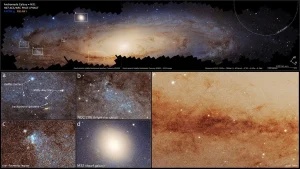
NASA’s Hubble Traces Hidden History of Andromeda Galaxy
In the years following the launch of NASA’s Hubble Space Telescope, astronomers have tallied over 1 trillion galaxies in the universe. But only one galaxy stands out as the most important nearby stellar island to our Milky Way — the…